City / Mains Water Test Kits
NATA-accredited laboratory analysis of your treated municipal water, benchmarked against Australian and International Drinking Water Guidelines. Australia Wide.
Featured Products
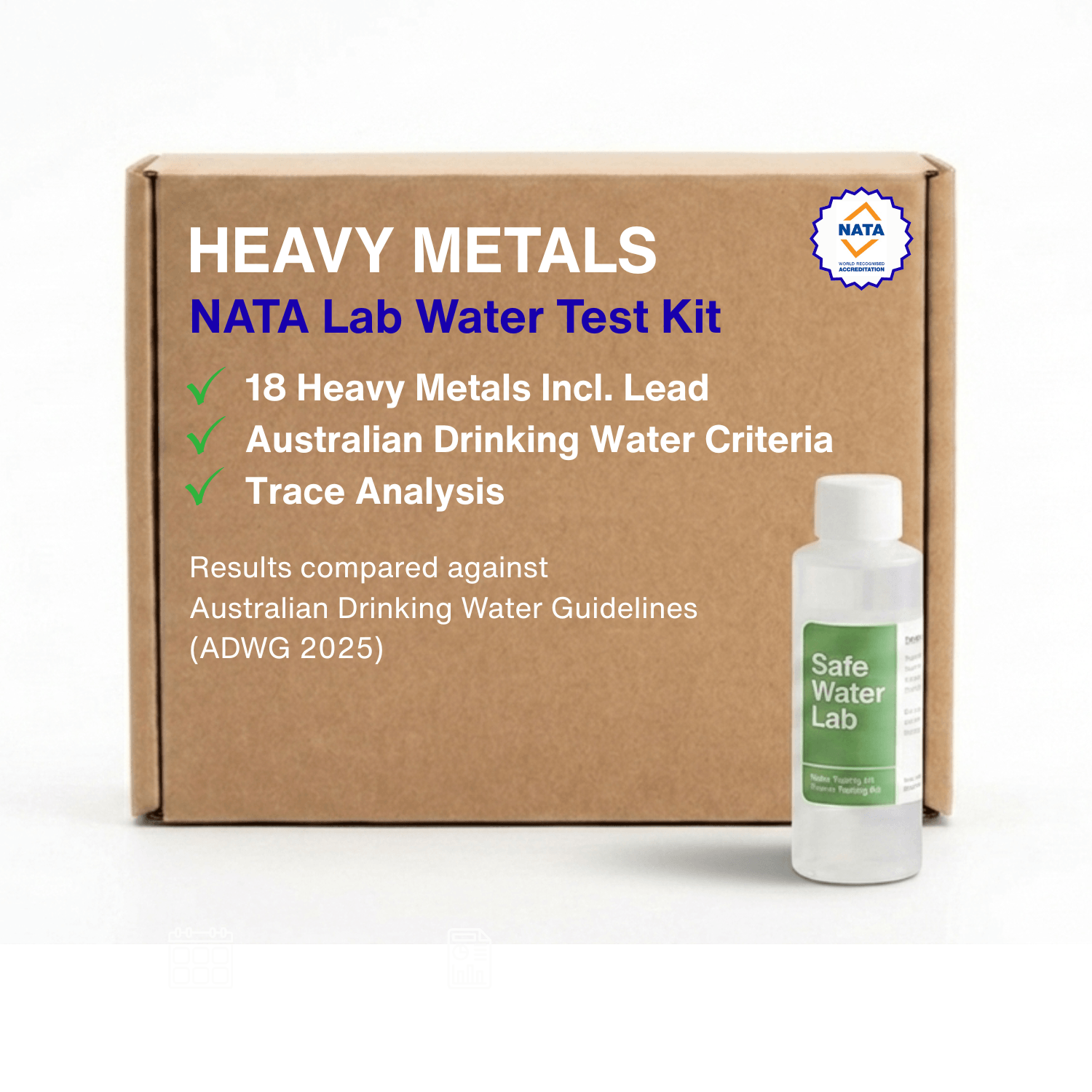
Heavy Metals Water Test Kit – 18 Metals | NATA-Accredited Laboratory Analysis
Find out whether toxic metals are present in your tap, tank or bore water. Metals can enter drinking water through corrosion of pipes, fittings and tapware, from roofing materials on rainwater tanks, or naturally from soil and rock in groundwater. Some metals, such as lead and arsenic, can affect health with long-term exposure above guideline levels, and you can't see, smell or taste them at these concentrations.
What's included
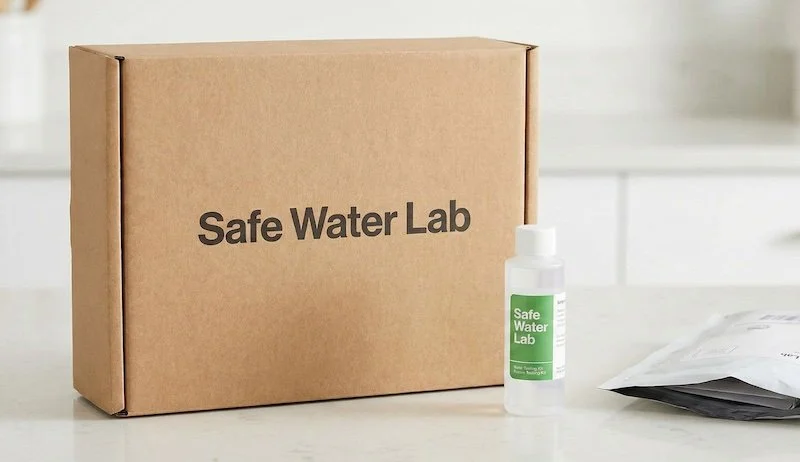
A sampling kit delivered to your door
Step-by-step sampling instructions
Prepaid return shipping to our NATA-accredited laboratory
Laboratory analysis of 18 heavy metals and metalloids per sample
A report comparing your results against the Australian Drinking Water Guidelines (ADWG)
Metals tested
Arsenic (As), Silver (Ag), Beryllium (Be), Boron (B), Cadmium (Cd), Chromium (Cr), Cobalt (Co), Copper (Cu), Mercury (Hg), Manganese (Mn), Molybdenum (Mo), Nickel (Ni), Lead (Pb), Antimony (Sb), Selenium (Se), Tin (Sn), Vanadium (V), Zinc (Zn)
One sample or two?
1 sample – $249
A snapshot of all 18 metals at one tap. Ideal for a general check of your drinking water.
2 samples – $299
Two bottles, each analysed for all 18 metals. For an extra $50, the second sample helps you work out where metals are coming from, or what's reaching your glass.
How to order 2 samples: on this page, select "2 samples" from the Samples option, then click Add to Cart. Your kit will arrive with two sets of bottles and instructions for both.
Two ways to use your second sample
First draw vs flushed – is it your plumbing?
Water that sits in pipes overnight can pick up metals such as lead, copper and nickel from brass fittings, solder and tapware. Collect your first sample from the first water out of the tap in the morning, then collect your second after running the tap as described in the kit instructions. If metals are higher in the first-draw sample and drop after flushing, the source is likely your household plumbing and fittings rather than the water supply. That helps you decide on next steps, such as running the tap before use or replacing fittings.
Before vs after your filter – what's reaching your glass?
Collect one sample from an unfiltered tap and one from your filtered tap. Comparing the two shows the metal levels at each point on the day you sampled. Considering a filter? Test first, so you know whether you need one that targets metals.
A comparison can only show a reduction if metals are detectable in the unfiltered water. A single pair of samples is a snapshot, not a certification of filter performance.
Need more than two sample points? Additional samples are $50 each. Contact us and we'll put together a kit for your site.
Why test for heavy metals?
Testing is especially worthwhile if:
Your home has older plumbing, brass fittings or metal tapware
You rely on rainwater tank or bore water
You've noticed discoloured water or a metallic taste
You're considering a water filter, or want to check the one you have
You want confidence in the water given to children or vulnerable family members
The Australian Drinking Water Guidelines note that metals can leach from plumbing products, particularly when water sits stagnant in pipes. Testing identifies whether this is happening in your home and guides practical action.
Know what's in your tap.
Want the full picture?
If you'd like a broader view of your water chemistry, covering heavy metals plus PFAS, VOCs and disinfection by-products, consider our Complete Water Audit.
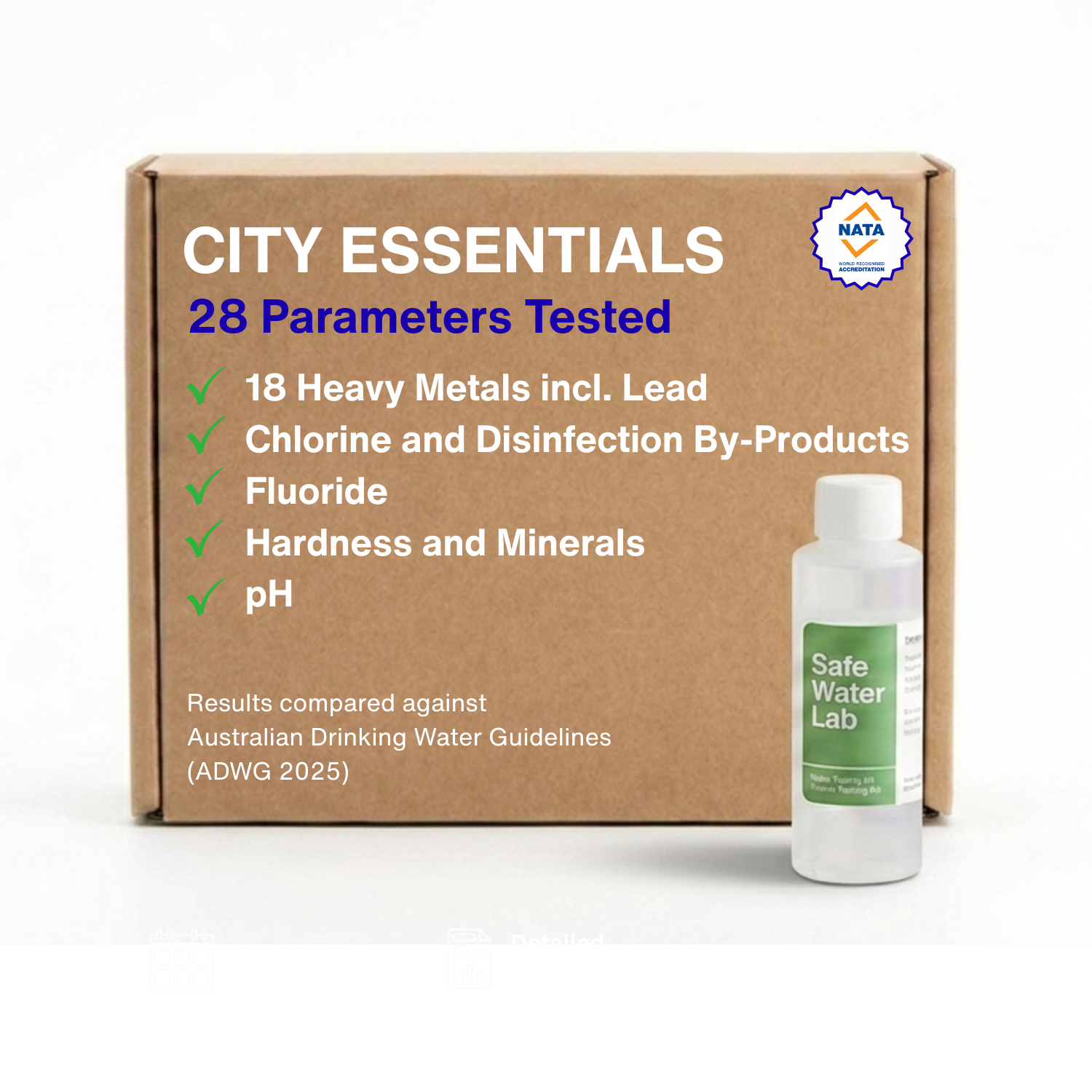
The core tap water audit for treated mains supply — NATA-accredited laboratory analysis of the contaminants that actually reach your tap.
Your water utility tests at the treatment plant, once a day. It can't account for what happens in the kilometres of pipe between the plant and your kitchen, or in your own internal plumbing. This kit tests the parameters most likely to matter at your tap: metals leaching from your pipes, the by-products of chlorine disinfection, and the chemistry that affects taste, scale, and corrosion.
The right choice for most households.
What's included
Complete sampling kit delivered to your door
All shipping included
NATA-accredited laboratory analysis
Detailed report benchmarked against the Australian Drinking Water Guidelines
Plain-language exceedance explanations
~26 Parameters
18 metals & metalloids — Lead, Copper, Arsenic, Zinc, Iron, Mercury, Nickel, Cadmium, Chromium, Manganese + 8 others
Chlorine residual & Trihalomethanes (THMs) — Chloroform, Bromoform, Bromodichloromethane, Total THMs
pH
Hardness & mineral chemistry — Calcium, Magnesium, Sodium, Potassium + more
Fluoride
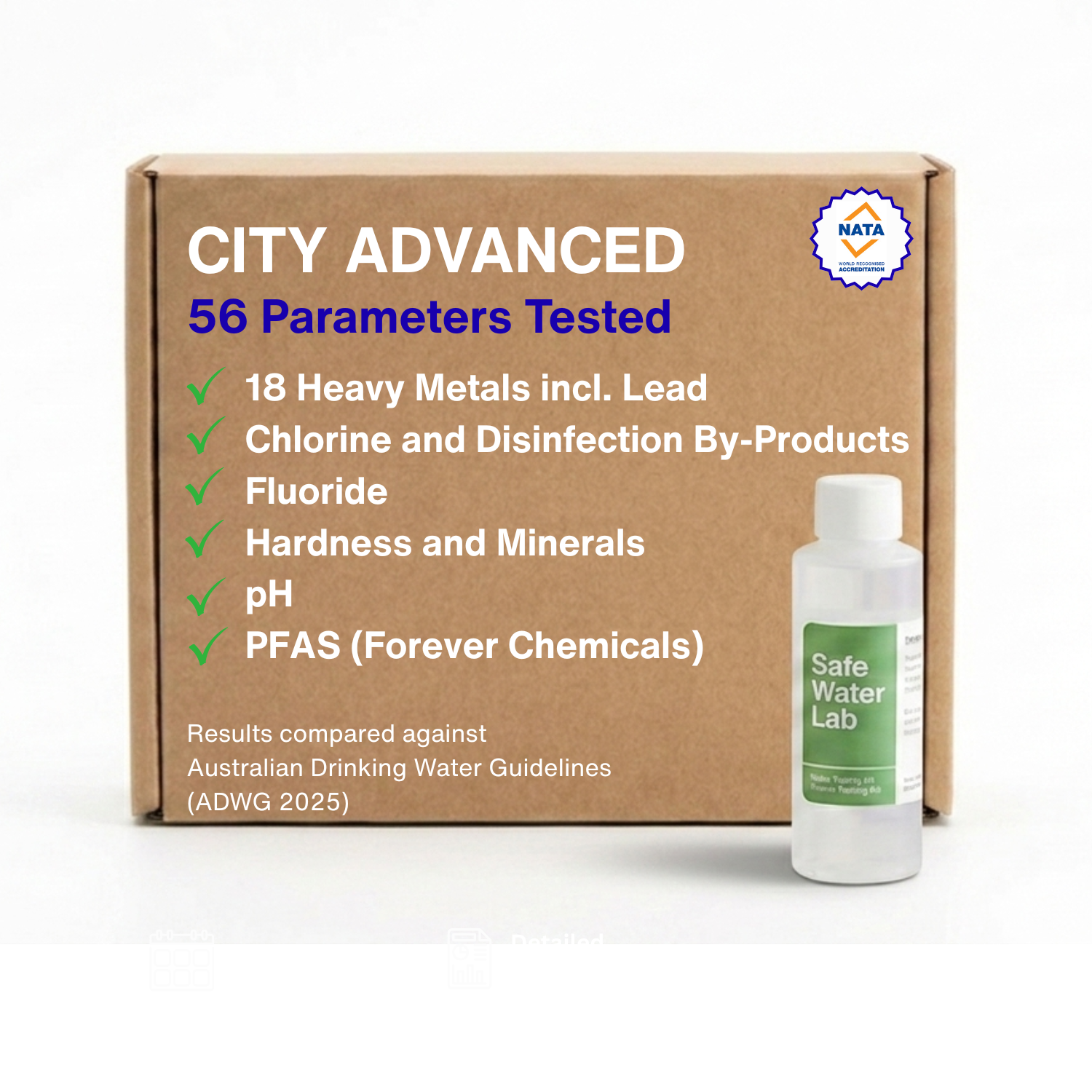
The core essentials tap water audit with a full PFAS screen — independent, NATA-accredited laboratory analysis for households who want certainty about the contaminants standard treatment doesn't remove.
This kit tests the full core essentials audit — 18 metals including lead and copper, chlorine and trihalomethanes (THMs), pH, hardness and mineral chemistry, and fluoride — and adds a 30-compound screen for PFAS, the "forever chemicals."
PFAS are synthetic chemicals used for decades in firefighting foam, non-stick coatings, and waterproofing. They don't break down in the environment or the body, they enter water catchments from industrial sites, airports, and defence bases, and critically, standard municipal treatment does not remove them. In 2025 the Australian Drinking Water Guidelines tightened PFAS limits by up to 94%, meaning water considered safe a year ago may no longer meet the benchmark. We test 30 compounds to trace level — well below the new limits.
Because we don't sell filters or treatment products, your result is genuinely independent.
What's included
Complete sampling kit delivered to your door
All shipping included
NATA-accredited laboratory analysis
Detailed report benchmarked against the Australian Drinking Water Guidelines
Plain-language explanations for any exceedance
~56 Parameters
18 metals & metalloids — Lead, Copper, Arsenic + 15 others
Chlorine residual & Trihalomethanes (THMs)
pH, Hardness & mineral chemistry
Fluoride
30 PFAS compounds at trace detection — PFOS, PFOA, PFHxS, PFNA + 26 precursors (0.001–0.005 µg/L)
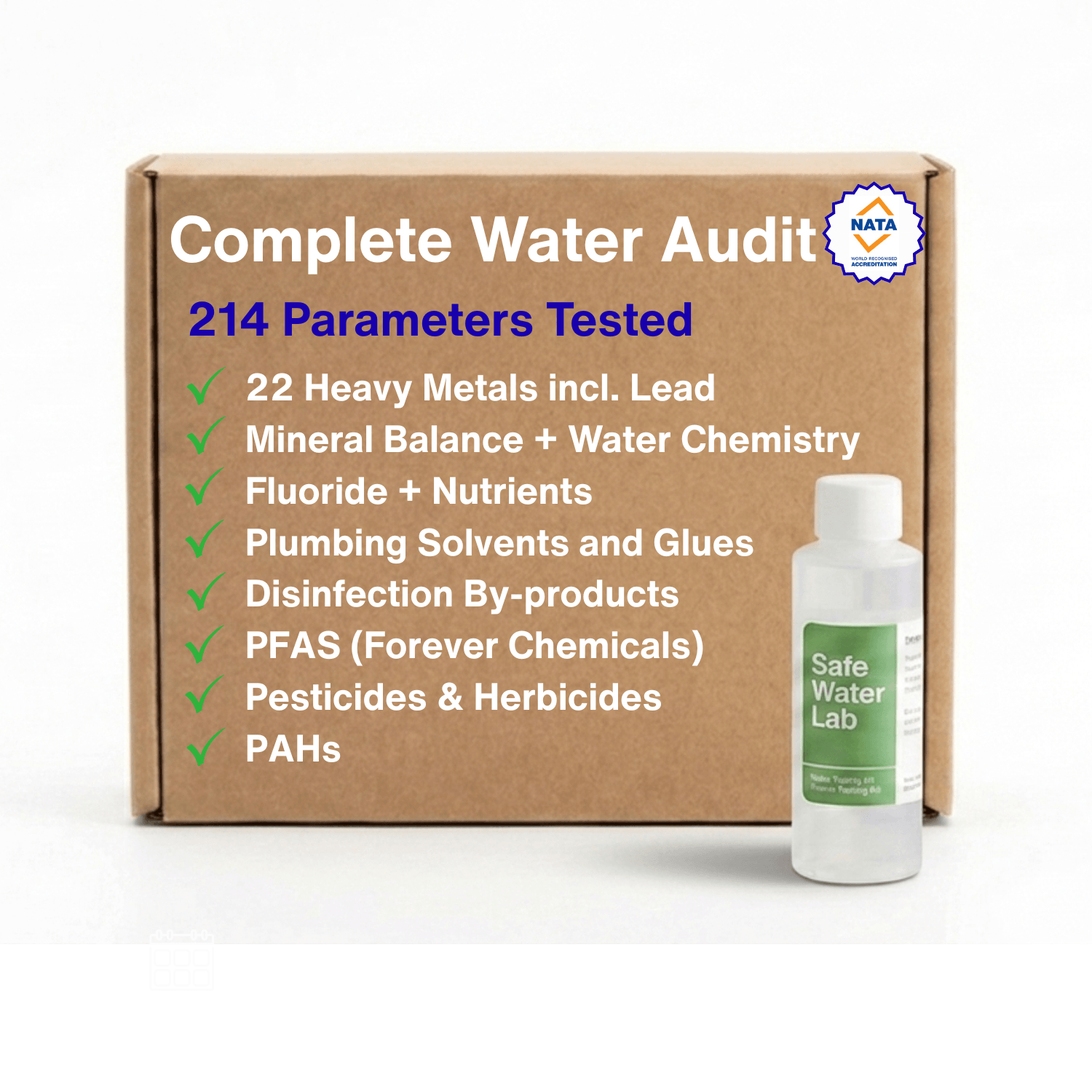
The most comprehensive water test available in Australia. 214 parameters across PFAS, metals, pesticides, herbicides, VOCs, PAHs, microbiology and nutrients in a single kit. Works on any water source. NATA accredited laboratory analysis.
214 Analytes. Every Meaningful Risk Category. One Submission.
Most water tests are designed around a single concern — a specific chemical class, a particular source type, or a regulatory compliance check. This kit takes a different approach: a single, comprehensive audit covering the full range of biological, chemical, and physical parameters relevant to Australian residential water, regardless of supply type.
What the Kit Includes
Complete multi-bottle sampling kit with chain-of-custody documentation
Pre-paid express return shipping to our NATA-accredited laboratory partner
Laboratory analysis across 214 analytes
Interpreted engineering report comparing all results against current Australian Drinking Water Guidelines (ADWG)
Why 214 Parameters
Your water is subject to two distinct risk categories. Source risks originate from the catchment, aquifer, or distribution system — geological contaminants, agricultural runoff, industrial residues. Infrastructure risks are introduced after the water leaves the main — pipe corrosion, tank linings, plumbing adhesives, disinfection by-products.
Most kits address one or the other. This panel is designed to capture both.
Analyte Coverage by Category
Metals and Geological Contaminants(19 analytes) Covers infrastructure leaching indicators (Lead, Copper) alongside geogenic contaminants (Arsenic, Uranium) and a full trace metal suite.
Volatile Organic Compounds(54 analytes) A dual-purpose screen for industrial solvents and fuel components (BTEX: Benzene, Toluene, Ethylbenzene, Xylene) and plumbing residues from PVC adhesives and resins (Vinyl Chloride, Styrene).
PFAS — Per- and Polyfluoroalkyl Substances(30 analytes) The complete 30-compound panel: PFOS, PFOA, PFHxS, and 27 additional precursors and sulfonates. Detection limits of 1–5 ng/L by LC-MS/MS, calibrated to be well below current ADWG health guideline values.
Pesticides and Herbicides(64 analytes) Comprehensive screen for Organochlorine Pesticides (OCPs), Organophosphorus Pesticides (OPPs), and Triazine Herbicides. Relevant for any supply with agricultural land in the catchment or recharge zone.
Hydrocarbons — TRH and PAHs(25 analytes) Total Recoverable Hydrocarbon fractions plus Polycyclic Aromatic Hydrocarbons (PAHs), including Benzo(a)pyrene. PAHs can enter water via bushfire ash, asphalt roof runoff, or proximity to industrial land use — not routinely included in standard residential panels.
Disinfection By-Products(included in VOC panel) Trihalomethanes (THMs) formed during chlorination are captured within the VOC screen. On tank or bore water, these same parameters serve as indicators of broader organic loading.
Nutrients(4 analytes) Ammonia, Nitrate, Nitrite, and Total Oxidised Nitrogen (NOx) — indicators of sewage influence, fertiliser infiltration, or septic system proximity.
Microbiological Indicators: E. coli. A standard bacteriological screen confirming absence of faecal contamination.
Physical and Chemical Parameters(14 analytes) pH, Electrical Conductivity, TDS, Total and fractional Alkalinity, Hardness, Calcium, Magnesium, Potassium, Sodium, Chloride, Sulphate. The baseline characterisation of water chemistry — relevant to corrosivity, scaling, and palatability assessment.
Additional Parameters(2 analytes) Formaldehyde (relevant to certain plumbing materials and renovation scenarios) and Fluoride (reported against ADWG guideline values for both deficiency and excess).
Suitable For
Mains, tank, and bore water supplies
Properties with mixed or unknown plumbing materials
Catchments with agricultural, industrial, or bushfire-affected land use history
Baseline documentation for property purchase, due diligence, or ongoing monitoring
Households seeking a single comprehensive dataset rather than multiple targeted tests
A note on microplastics: Microplastic analysis requires a separate sampling and laboratory methodology and is not included in this panel. It is available as a standalone add-on kit.
Not sure you need everything? You can also choose a source-specific kit instead:
A Note on Bacterial Testing (E. coli & Coliforms)
Bacteria testing is time-sensitive. To get the most precise reading of the water at your tap, the prescribed window for the lab to receive your sample is within 24 hours of collection. Express Post delivery within these timeframes is not always achievable, particularly in regional areas.
To give your sample the best chance of reaching the lab in the shortest possible timeframe:
Collect and post on the same day, early in the week (Monday or Tuesday morning).
Lodge over the counter at the post office before the daily Express Post collection.
What happens if transit takes longer than 24 hours? The laboratory will still test your sample, and the bacterial results will be reported as "indicative." Keep in mind that the longer a sample spends in transit, the less weight those specific E. coli and coliform results carry.
How It Works
-
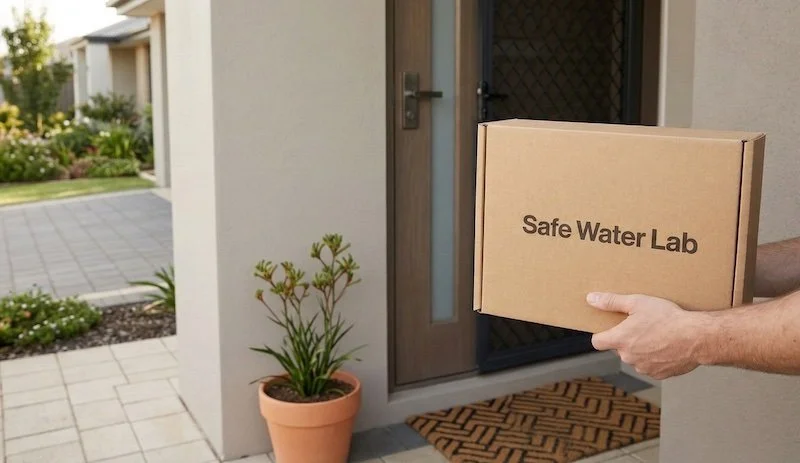
Step 1 - Select and purchase your test
We mail you a testing kit complete with laboratory testing bottles and step by instruction of how to collect your sample.
-
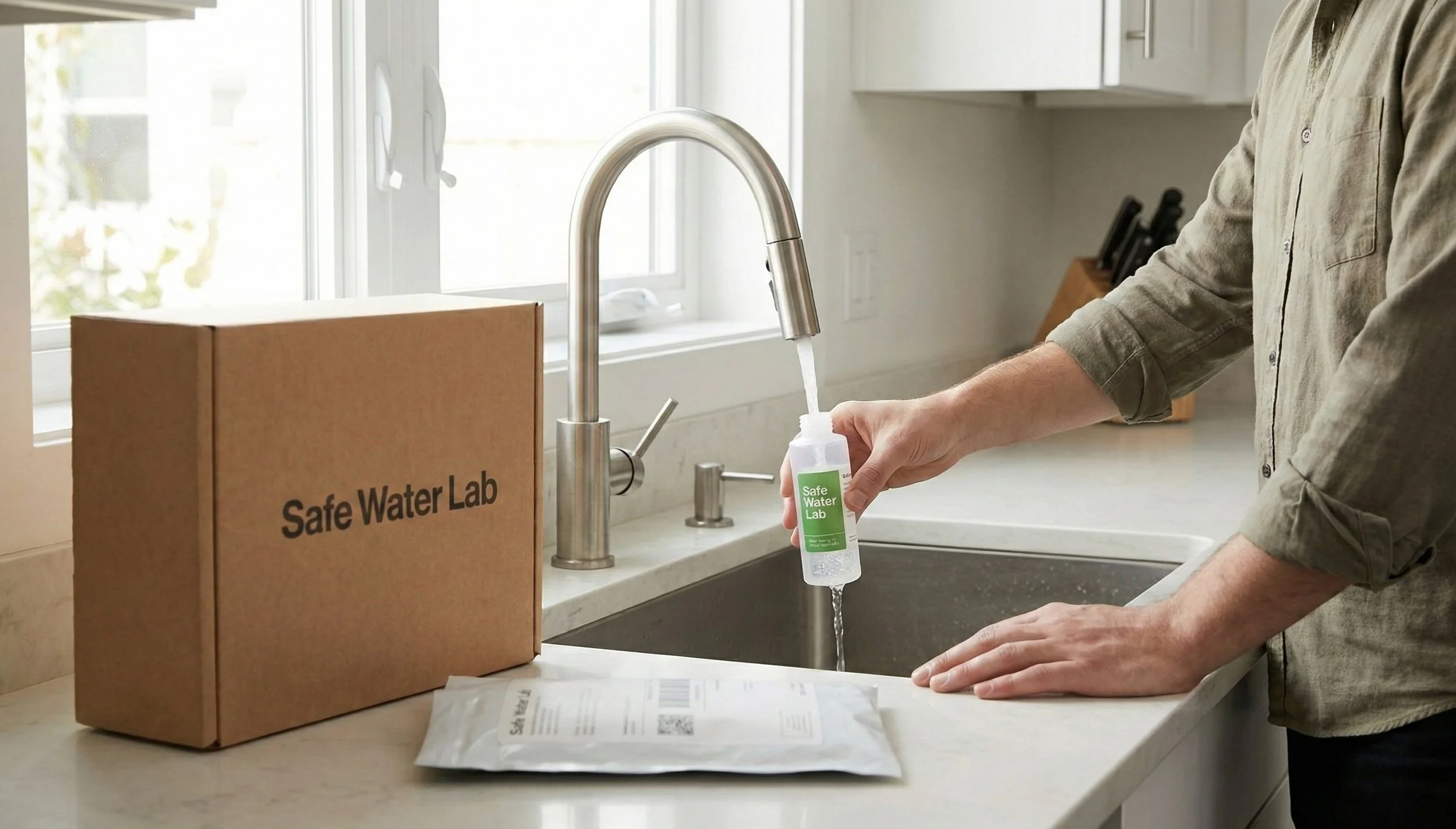
Step 2 - Collect a water sample
Fill the supplied laboratory testing bottles with a sample of your drinking water. Place the bottles in the supplied postage parcel complete with pre-paid express shipping return label and place in post.
-
Step 3 - Laboratory Testing
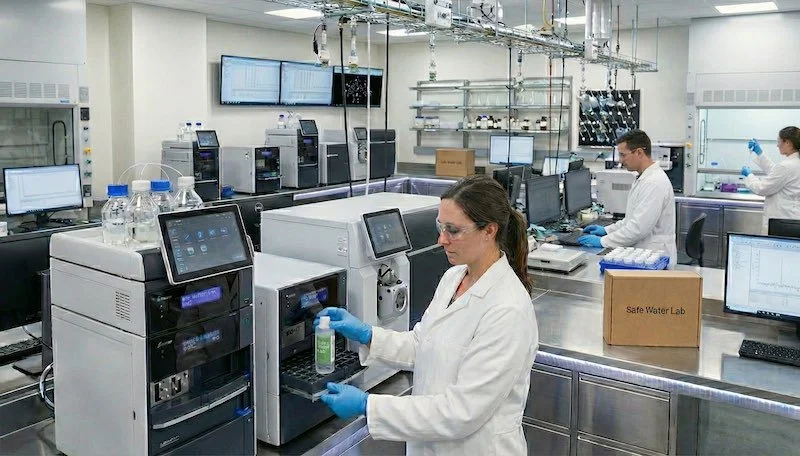
Your water sample will be sent to a NATA accredited Australian laboratory for testing. Our laboratory partners typically complete the analysis within 5 business days.
-
Step 4 - Receive your results
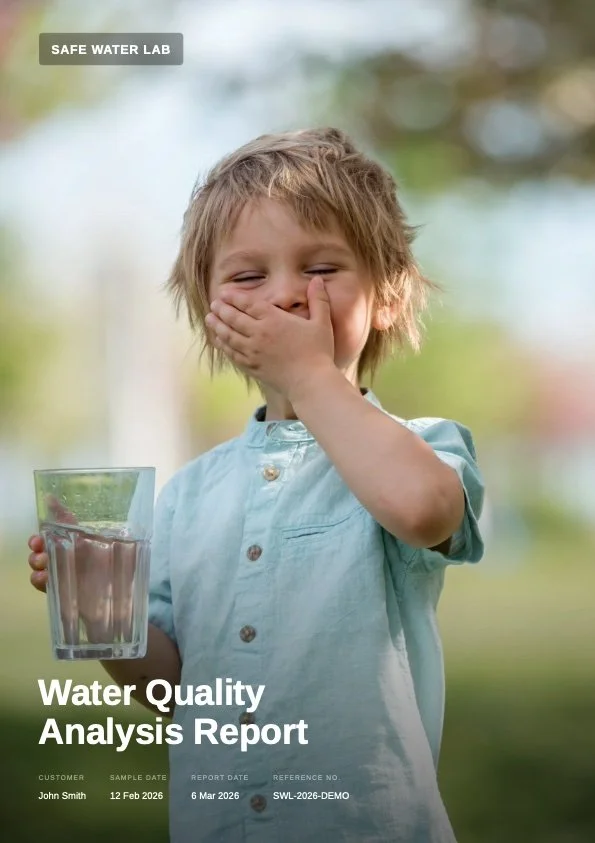
Your detailed Water Quality Analysis Report is delivered as a digital PDF — plain-English results benchmarked against Australian drinking water guidelines, with the original NATA-accredited Certificate of Analysis included.
Which city water kit is right for you?
Treated mains water is safe at the plant — but the water at your tap travels through kilometres of pipe and your own internal plumbing first. Each kit builds on the one before it. Here's exactly what each one tests, and why each contaminant matters.
Already have a filter? Test before and after it.
A water test is the only way to know whether your filter is actually doing what it claims. Most household filters aren't independently certified to remove specific contaminants — and even good ones lose effectiveness as the cartridge ages. We recommend testing both your unfiltered tap water and your filtered water so you can see exactly what your filter is removing, and what it's missing. It's also worth re-testing periodically — every 12 months, or whenever you change cartridges — to confirm your filter is still performing. Because we don't sell filters, our results are genuinely independent: we simply tell you what's in your water, before and after.
What’s Included in Each Test
| 01Heavy Metals & Pipe Corrosion | ||||
| 18 metals & metalloidsLead, Copper, Arsenic, Nickel, Zinc, Iron, Mercury, Cadmium, Chromium, Manganese, Selenium, Barium, Antimony, Cobalt, Molybdenum, Tin, Vanadium, Silver | ✓ | ✓ | ✓ | ✓ |
| 02Water Chemistry & Corrosion | ||||
| pH & Chlorine residualHow corrosive your water is and how much disinfectant remains at the tap | ✕ | ✓ | ✓ | ✓ |
| Hardness & mineral chemistryHardness, Calcium, Magnesium, Sodium, Potassium — affects taste, scale, and corrosion | ✕ | ✓ | ✓ | ✓ |
| FluorideDental health — Australian Drinking Water Guideline 1.5 mg/L | ✕ | ✓ | ✓ | ✓ |
| 03Chlorine Treatment By-Products | ||||
| Trihalomethanes (THMs)Chloroform, Bromoform, Bromodichloromethane, Total THMs — formed when chlorine reacts with organic matter during treatment | ✕ | ✓ | ✓ | ✓ |
| 04PFAS — "Forever Chemicals" | ||||
| 30 PFAS compounds at trace detectionPFOS, PFOA, PFHxS, PFNA + 26 precursors at 0.001–0.005 µg/L — below the tightened 2025 Australian Drinking Water Guidelines | ✕ | ✕ | ✓ | ✓ |
| 05Plumbing Solvents & Glues | ||||
| Vinyl Chloride, Styrene & FormaldehydePVC pipe cement and adhesive residuals — can leach for months after renovation or new construction | ✕ | ✕ | ✕ | ✓ |
| 06Industrial & Fuel Solvents | ||||
| 54 VOCs — BTEX, TCE, PCE + 50 othersFull VOC SIM scan at trace detection level. BTEX from petrol stations, TCE/PCE from dry cleaners and historical industrial sites | ✕ | ✕ | ✕ | ✓ |
| What's Included | ||||
| Complete sampling kit delivered to your door | ✓ | ✓ | ✓ | ✓ |
| All shipping included | ✓ | ✓ | ✓ | ✓ |
| NATA-accredited laboratory analysis | ✓ | ✓ | ✓ | ✓ |
| Colour-coded PDF report benchmarked against the Australian Drinking Water Guidelines | ✓ | ✓ | ✓ | ✓ |
| Plain-language exceedance explanations | ✓ | ✓ | ✓ | ✓ |
| Total parameters tested | ~18 | ~26 | ~56 | ~113 |
The fastest, most affordable way to check whether lead, copper, or other metals are leaching from your plumbing.
Order Now — A$199The complete tap water audit — metals from your plumbing, chlorine treatment by-products, water chemistry, and fluoride.
Order Now — A$299Everything in Essentials, plus the PFAS screen — 30 forever chemicals at trace detection, below the tightened 2025 Australian Drinking Water Guidelines.
Order Now — A$549Adds the full VOC scan and plumbing solvents — the most comprehensive city water test we offer.
Order Now — A$799Every contaminant class in a single kit — metals, VOCs, PFAS, pesticides, herbicides, PAHs, microbiology, nutrients, and disinfection by-products. Trace-level detection throughout. Works on any water source.
PFOS, PFOA, PFHxS + 27 precursors at trace detection (0.001–0.005 µg/L). Benchmarked against the 2025 Australian Drinking Water Guidelines.
Identifies the amount, size, and type of microplastic particles in your drinking water across 8 common plastics — including the polymers used in pipes, bottles, and packaging. There is no Australian safety limit yet, so we simply report what's there.
All analysis performed by NATA-accredited laboratories under ISO/IEC 17025:2017 · All prices include GST · All shipping included
What we test for, and why it matters
Treatment reduces risk — it doesn't eliminate it. What comes out of your tap depends on your catchment, your pipes, and what your utility actually tests for. Here's a closer look at each contaminant class we screen, and why it earns its place in the kit.
Independent Testing by Environmental Scientists
Your council reports compliance at the system average. That doesn't tell you what's coming out of your tap. We test for the contaminants that actually reach city households — lead from older internal plumbing, disinfection by-products from the distribution network, PFAS from upstream sources, and microplastics. Results are interpreted by environmental scientists and benchmarked against the Australian Drinking Water Guidelines, so you can make an informed decision about your water and any treatment system you have or are considering.
We don't sell filtration systems, water softeners, or treatment products — and we don't have a referral arrangement with anyone who does. Our results don't lead to a sale. They tell you what's actually in your tap water, and what you do next is up to you.
Most Australian household filters aren't independently certified to NSF/ANSI 53 or 58 — the international standards for contaminant reduction. Manufacturer claims rarely come with verifiable test data. Lab testing your water before and after the filter is the only way to know whether the system is doing what it promised.
Lead and copper from older internal plumbing. Disinfection by-products like trihalomethanes formed in distribution. PFAS from upstream sources. Microplastics from pipework. Treatment plant compliance doesn't account for what happens in the kilometres of pipe between the plant and your kitchen.
Safe Water Lab is operated by environmental scientists with backgrounds in water quality and contaminated land. Every kit is specified for city water — we test for the contaminants that actually matter, choose the right test method and detection limit for each one, and write sampling instructions so the result reflects what's really at your tap. Every report is read by someone who understands what the numbers mean, before it reaches you.
- ✕Cannot detect PFAS, pesticides, or solvents
- ✕Lead detection limits 100× higher than the guideline
- ✕No measurement of trihalomethanes or disinfection by-products
- ✕Colour-match accuracy varies by user and lighting
- ✓Up to 134 parameters at trace detection levels
- ✓Lead, copper, and 19 other metals quantified to µg/L
- ✓Disinfection by-products including THMs reported separately
- ✓Results signed off by an accredited laboratory — auditable, traceable, defensible
Your treatment plant tests once a day, at the plant. The water at your kitchen tap travels through pipes, fittings, and storage tanks the plant can't see. The only way to know what you're drinking is to test where you drink it.
Your Report
Not raw data. A verdict on your water
— with a clear path forward.
Most lab tests return a spreadsheet of numbers with no context. Your Safe Water Lab report is different — it tells you what was found, what it means for your household, and exactly what to do about it.
At-a-glance results summary
Your report opens with a colour-coded overview table. One page tells you which categories are clear and which need attention — before you read a single technical result.
Built to be understood in under a minute, by anyone.
Every result benchmarked
Each result is shown alongside the official guideline limit, with a plain-English status — below guideline, below detection, or exceeds limit. Not a number without context. A clear answer.
Benchmarked against the Australian Drinking Water Guidelines (ADWG, updated June 2025) and World Health Organization (WHO) guidelines.
Plain-English expert interpretation
Anything outside guidelines gets its own dedicated write-up — what it means, what likely caused it, and how it relates to the rest of your results. Written by environmental scientists, not generated from a template.
Interpretation tailored to your specific result, not a stock paragraph.
Specific next steps — not generic advice
Where action is needed, the report tells you precisely what to do and which professional to call — not "consult a professional." Step-by-step guidance built around your actual results, in the order you should tackle them.
A practical action plan, not a list of warnings.
The original NATA lab certificate
Your report includes the full laboratory Certificate of Analysis — the primary analytical record, with accreditation numbers, authorising signatures, and method references. This is the document that holds legal and insurance weight.
Issued by a NATA-accredited laboratory, ISO/IEC 17025 certified.
A PDF you own — forever
Delivered as a professional branded PDF to your inbox. Share it with your plumber, water treatment specialist, real estate agent, or insurer. No login portal, no expiry, no third-party platform. Just a document you own and can use.
Delivered within 5–7 business days of your sample arriving at the lab.
Analysis is performed by leading NATA-accredited laboratories, certified to ISO/IEC 17025 — the international standard for testing competence. Your Safe Water Lab report translates that accredited laboratory data into a document you can understand and act on.
See it for yourself
A real Safe Water Lab report — every page, start to finish.

The same laboratories trusted by Australian councils, water utilities, and environmental regulators.
Professional-grade analysis, delivered to your door.
City Water - Common Questions
-
Possibly. While lead pipes were phased out in new construction from the 1980s, brass fixtures and fittings used well into the 1990s and 2000s can contain significant lead. Additionally, if your suburb has older mains infrastructure, lead can still enter the supply before it reaches your property.
-
The Australian residential water filter market operates without mandatory product certification or independent performance verification. Manufacturers are not required to substantiate contaminant removal claims before bringing a product to market — meaning the performance figures on the packaging are largely self-reported. A NATA-accredited laboratory baseline provides the only objective, scientifically defensible audit of whether your filtration system is performing as claimed, or creating a false sense of security.
-
It is incredibly simple. When your kit arrives, it includes step-by-step instructions. You simply fill the provided bottles from your tap, write the date on the included form, and place everything into the pre-paid express return mailer. Drop it at any Australia Post Express Post collection point, and you are done.
-
Utilities test at the treatment plant and at selected points in the distribution network — not at your tap. The water that reaches your kitchen has travelled through kilometres of distribution mains and your own internal plumbing. Metals can leach from pipes and fittings, and disinfection by-product concentrations typically increase with transit time. This kit tests what actually comes out of your tap.
-
Treated municipal water contains a chlorine residual specifically to prevent microbial contamination. This residual makes culture-based E. coli and coliform tests unreliable at the tap — you're more likely to get a false result than a meaningful one. If your water has lost its chlorine residual (which would indicate a distribution problem), you'd typically notice it by taste or odour before a test kit arrives. Our bore and tank kits include microbiology because those sources have no disinfection residual.
-
City Essentials covers the core health parameters — metals, minerals, and water chemistry. City Complete adds disinfection by-products and a full volatile organic compound screen for a comprehensive chemical profile. City Advanced adds PFAS screening. If you want everything in a single kit, the Complete Water Audit covers 214 parameters across every contaminant class. Email us at info@safewaterlab.com.au with your suburb and we'll recommend a kit.
-
Our laboratory partner completes analysis within 5 business days of receiving your sample. Your report is typically delivered by email 1–2 business days after that. Total time from posting your sample to receiving results is around 7–9 business days depending on postal transit.