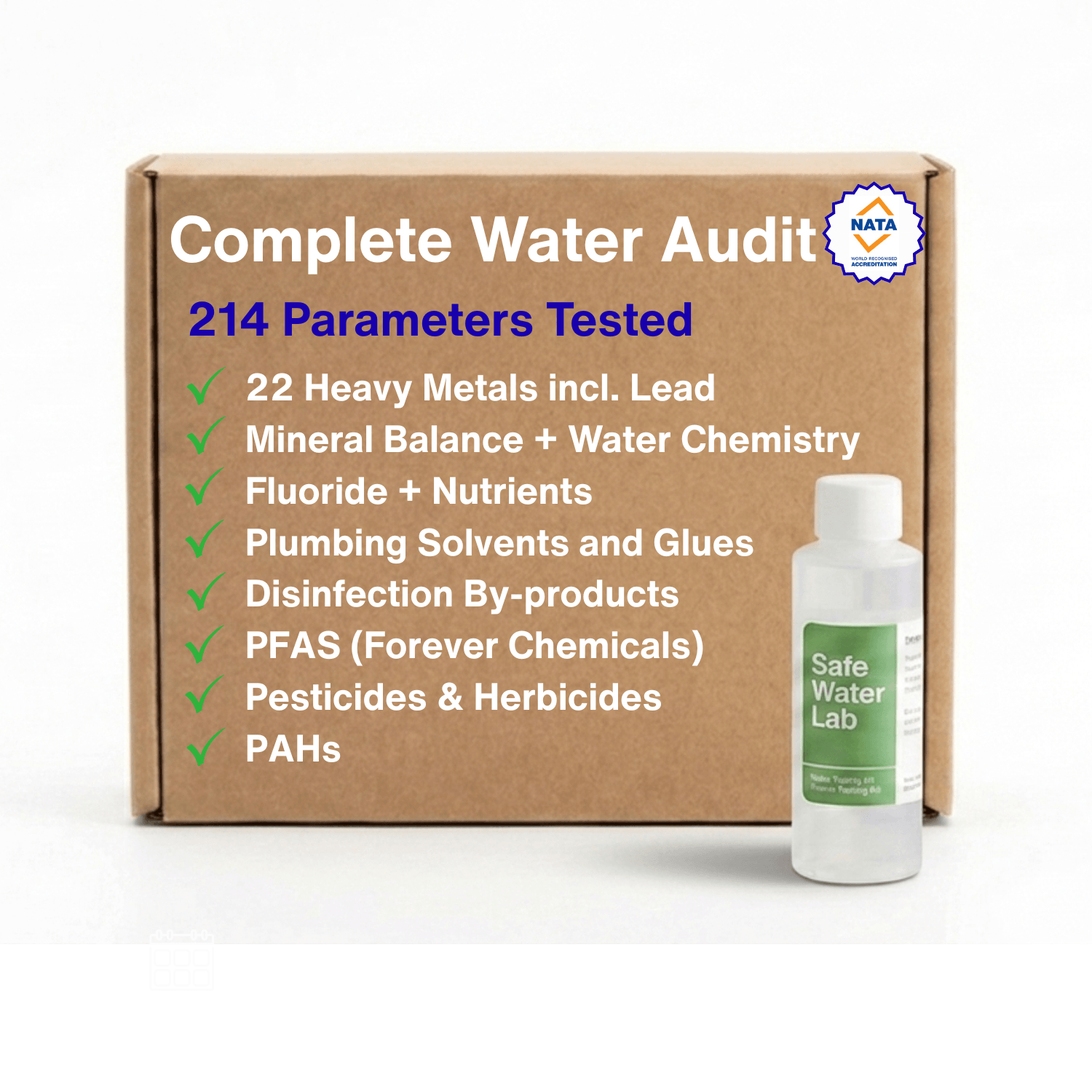
The same assessment a consultant would run — without the call-out fee.
If you engaged an environmental consultant to assess your water, this is the analysis they would commission. The same NATA-accredited laboratory. The same instruments. The same trace-level methods. The same interpretation against the Australian Drinking Water Guidelines — written, in our case, by environmental scientists with backgrounds in water quality and contaminated land.
The difference is what you're not paying for. A consultant's residential water assessment typically runs well over a thousand dollars in attendance, sampling, and report-writing fees — before the laboratory work even begins. We've removed the call-out and kept everything that actually determines the quality of your result. No shortcuts. No compromises. Just the science.
How It Works
-
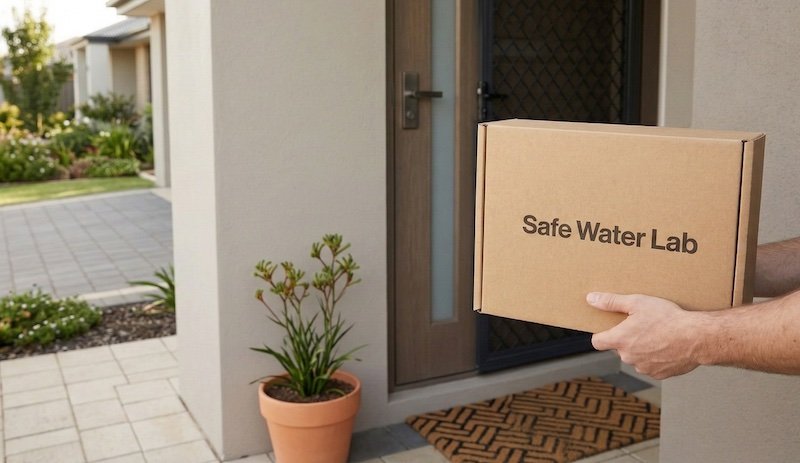
Step 1 - Select and purchase your test
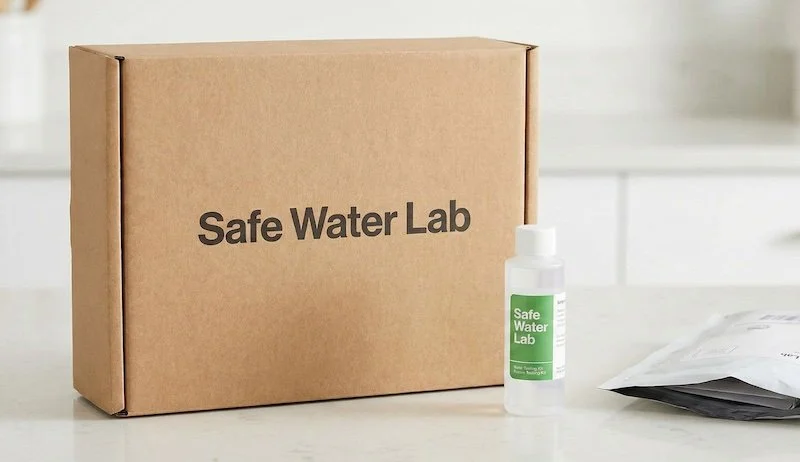
We mail you a testing kit complete with laboratory testing bottles and step by instruction of how to collect your sample.
-
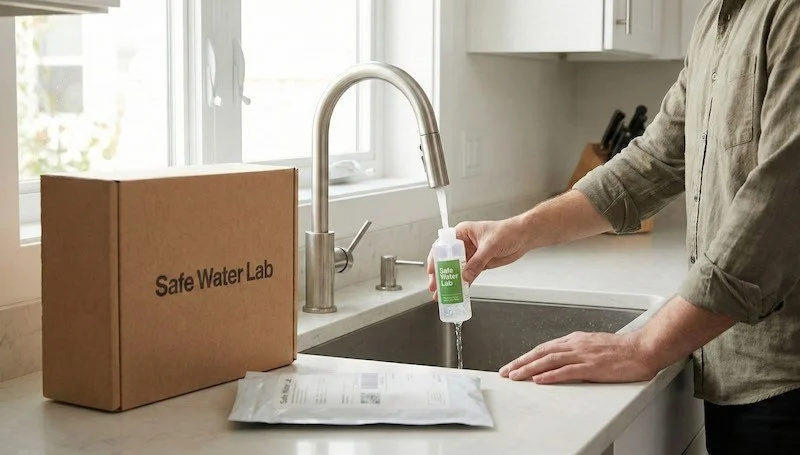
Step 2 - Collect a water sample
Fill the supplied laboratory testing bottles with a sample of your drinking water. Place the bottles in the supplied postage parcel complete with pre-paid express shipping return label and place in post.
-
Step 3 - Laboratory Testing
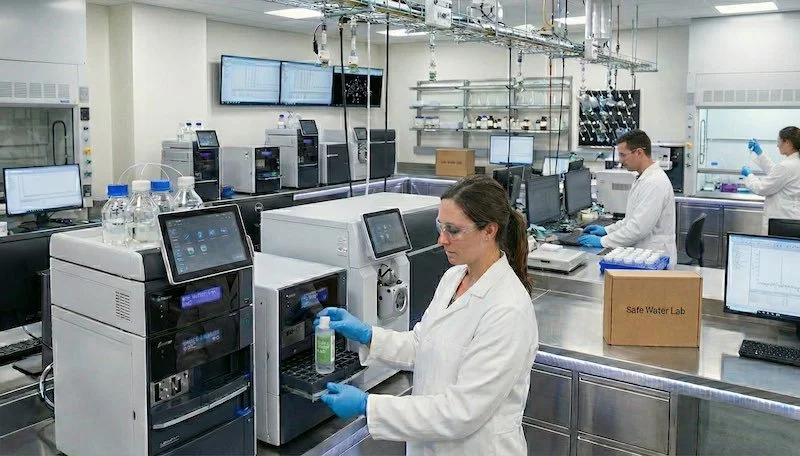
Your water sample will be sent to a NATA accredited Australian laboratory for testing. Our laboratory partners typically complete the analysis within 5 business days.
-
Step 4 - Receive your results
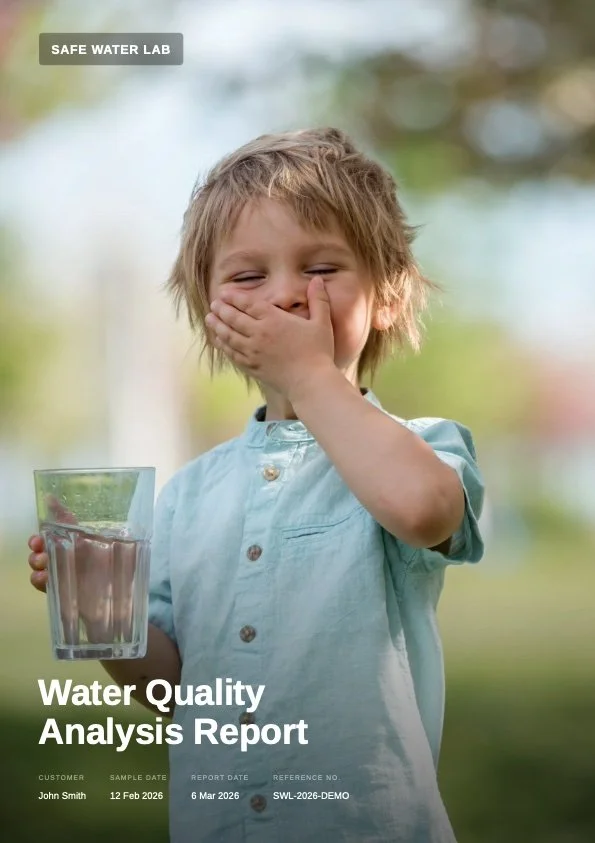
Your Water Quality Analysis Report is delivered as a digital PDF — prepared by an environmental scientist, with results benchmarked against Australian and international water quality guidelines, and the original NATA-accredited Certificate of Analysis included.
What each group tells you, and why it's included
The Complete Audit covers every meaningful contaminant class for Australian residential water. Tap any group to see where it comes from and why it matters.
Two pathways. Lead, copper and nickel leach from plumbing — solder joints, brass fittings, and ageing pipes, especially in pre-1990s homes. Arsenic, uranium, iron and manganese are geogenic, dissolving naturally from the rock and sediment groundwater moves through.
There is no safe level of lead, particularly for children and pregnant women. Arsenic and uranium are naturally elevated in many Australian aquifers at concentrations that exceed health guidelines without any visible sign, taste, or odour.
Per- and polyfluoroalkyl substances enter water catchments and groundwater from firefighting foam, industrial sites, airports, and defence bases. They migrate slowly through soil and persist in the environment indefinitely — and standard municipal treatment does not remove them.
PFAS accumulate in the body over time and do not break down. The 2025 Australian Drinking Water Guidelines tightened limits for some compounds by up to 94%, meaning water considered safe a year ago may no longer meet the benchmark. They have no taste or odour at concerning concentrations.
A dual-purpose screen. Industrial solvents and fuel components — including BTEX, trichloroethylene (TCE) and tetrachloroethylene (PCE) — migrate into groundwater from petrol stations, dry cleaners, and historical industrial sites. Plumbing residues such as vinyl chloride and styrene leach from PVC pipe cements and adhesives.
Many VOCs are colourless and odourless at concerning concentrations, and several — including vinyl chloride — are recognised carcinogens. Solvent contamination can persist in groundwater for decades after the original source is gone, making it impossible to detect without laboratory analysis.
Organochlorine and organophosphorus pesticides and triazine herbicides leach through soil into groundwater, and run off into surface catchments, from agricultural land. Atrazine is among the most commonly detected chemicals in Australian agricultural groundwater.
Some organochlorines — such as dieldrin and DDT — persist in groundwater for decades after their agricultural use has ceased. These compounds are not removed by standard filtration and are relevant for any supply with agricultural land in its catchment or recharge zone.
Total Recoverable Hydrocarbons and Polycyclic Aromatic Hydrocarbons (PAHs) enter water from fuel and oil contamination, asphalt and bitumen roof runoff, proximity to industrial land, and bushfire ash washed into tanks and catchments.
Several PAHs, including benzo(a)pyrene, are carcinogenic. PAHs are not routinely included in standard residential water panels, yet they are a genuine risk for tanks with asphalt-shingle roofs or properties affected by bushfire — making them worth screening in a comprehensive audit.
Trihalomethanes (THMs) form when the chlorine used to disinfect mains water reacts with naturally occurring organic matter. Levels rise with water temperature, organic load, and distance from the treatment plant. On tank or bore water, these same parameters indicate broader organic loading.
THMs are an unavoidable trade-off of safe disinfection, but long-term exposure at elevated concentrations is linked to health concerns. They are also one of the most common reasons treated water smells or tastes "chemically."
Ammonia, nitrate, nitrite and total oxidised nitrogen enter water from fertiliser infiltration, septic systems, and sewage influence. In bore water they indicate agricultural recharge; in tank water, organic matter and animal waste in the catchment.
Elevated nitrate is a serious concern for households with infants, where it can interfere with oxygen transport in the blood. Nutrient levels are also a direct indicator of source water integrity and nearby contamination pressures.
E. coli and thermotolerant coliforms enter water from faecal contamination — animal droppings, leaking septic systems, surface water infiltration, or a compromised bore casing or tank inlet. Tank and bore water have no disinfection residual to suppress bacterial growth.
These are the standard indicators of faecal contamination and the single most important safety test for any untreated supply. Their presence signals a direct risk of gastrointestinal illness and a pathway for other pathogens to enter the water.
pH, conductivity, TDS, alkalinity, hardness and the major ions reflect the natural mineral content of your water and how it interacts with your plumbing. They vary with geology, treatment, and the materials your water contacts on its way to the tap.
This is the baseline characterisation that underpins everything else. Low pH accelerates metal leaching from pipes; high hardness causes scale in appliances; salinity affects taste and suitability. Together they explain corrosivity, scaling, and palatability.
Formaldehyde is a residual of certain plumbing materials and a by-product of chlorination, most relevant in newly installed or renovated plumbing. Fluoride is dosed to a controlled level in most city supplies, but occurs naturally — sometimes at elevated levels — in groundwater.
Fluoride is reported against the Australian Drinking Water Guideline of 1.5 mg/L — relevant for both excess (common in some inland aquifers) and the controlled levels in treated supply. Formaldehyde is worth confirming in any recently re-plumbed home.
Your Report
The clarity you need. Zero guesswork.
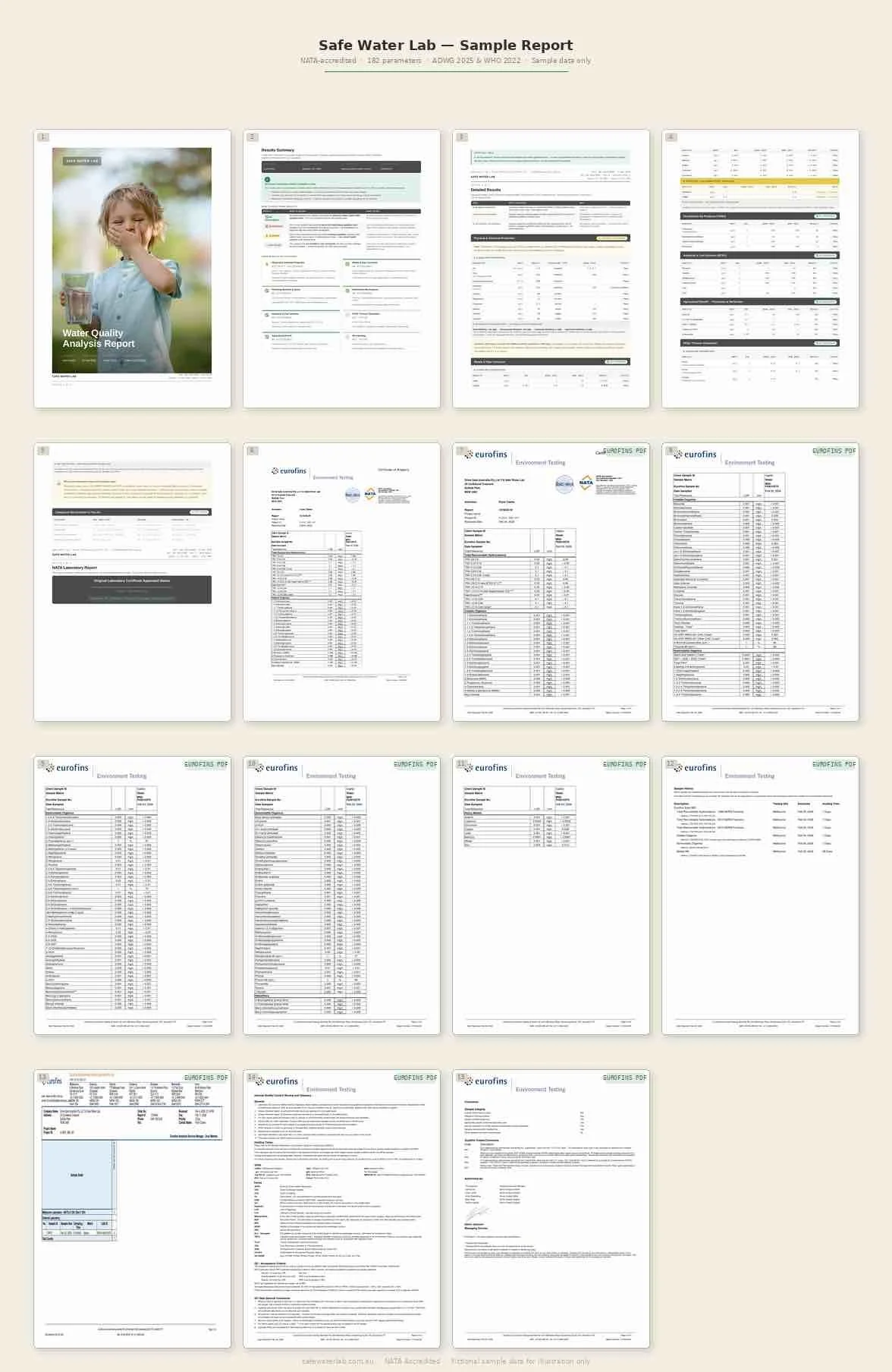
Every kit includes a Water Quality Analysis Report, prepared by an environmental scientist and delivered as a digital PDF.
Each report includes:
Results Summary — A one-page overview grouping results by contaminant category — microbiological, heavy metals, physical and chemical, and more — with pass/fail status and next steps for any exceedance. Know where you stand in 60 seconds.
Detailed Results — Every analyte compared against the relevant benchmarks: Australian Drinking Water Guidelines (ADWG), World Health Organization guidelines, and ANZECC livestock and irrigation water quality criteria where applicable.
NATA-Accredited Certificate — The original Certificate of Analysis from our partner laboratory. Your official record.
The accurate, independent answer to what's in your water
Whether your water comes from a city main, a rainwater tank, or a bore, the question is the same — what's actually in it? We test for the contaminants that genuinely matter for your supply, interpret the results against the Australian Drinking Water Guidelines, and tell you plainly where you stand.
We don't sell filtration systems, water softeners, or treatment products — and we don't have a referral arrangement with anyone who does. Our results don't lead to a sale. They tell you what's genuinely in your water, and what you do next is entirely up to you. Many of our customers find they need no treatment at all once they see the results.
Safe Water Lab is operated by environmental scientists with backgrounds in water quality and contaminated land. We choose the right test method and detection limit for each contaminant, and write sampling instructions so your result reflects what's really in your water. Every report is read by someone who understands what the numbers mean, before it reaches you.
The contaminants that matter — lead, PFAS, pesticides, solvents — are present at parts-per-billion concentrations. A colour-change strip can't measure them. Every sample is analysed by a NATA-accredited Australian laboratory to trace detection levels, under the same ISO/IEC 17025 standard relied upon by councils, utilities, and environmental regulators.
Every result is colour-coded and benchmarked against the Australian Drinking Water Guidelines. Where a parameter exceeds a guideline, we explain what it means, what's likely causing it, and what your options are — in plain English. The original NATA-accredited Certificate of Analysis is included with every report, so your result is auditable and defensible.
The same laboratories trusted by Australian councils, water utilities, and environmental regulators.
Professional-grade analysis, delivered to your door.
Get in touch
Questions, results queries, or just not sure where to start — we're here to help.