Garden Bore Testing
Mail-order bore water testing for residential garden bores. NATA-accredited laboratory analysis delivered to your door — no site visit, no consultant required.
Common Garden Bore Water Problems
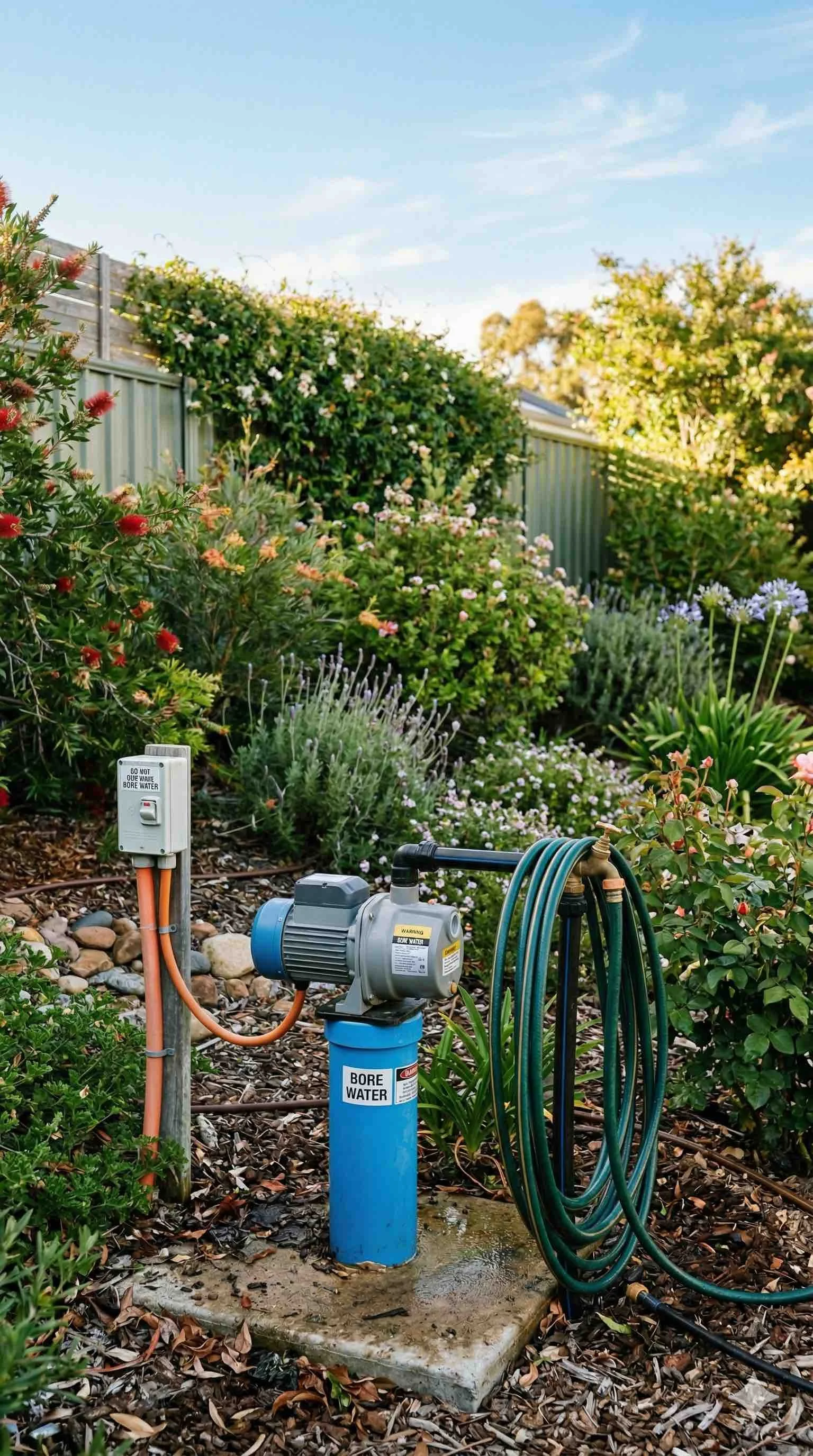
Iron leaves rust-coloured deposits on any surface contacted by irrigation spray — pavers, rendered walls, sandstone, guttering, and outdoor furniture. Manganese causes darker black-brown marks that are harder to remove. Even a single irrigation cycle per day builds visible staining within weeks. One of the most common bore water complaints from residential properties across coastal WA, SA, and QLD.
Elevated salinity is one of the most common reasons bore-irrigated lawns and garden beds fail to thrive despite regular watering. Shallow aquifers in coastal WA, SA, and Queensland frequently deliver saline water that stresses lawn varieties, bleaches foliage, and progressively damages salt-sensitive plants including roses, citrus, and ornamentals. Boron compounds the damage — phytotoxic to many common garden species above 1 mg/L.
High hardness and bicarbonate deposit carbonate scale inside drip emitters, soaker hose fittings, and pop-up sprinkler heads. Emitters block progressively, creating dry patches and uneven coverage across garden beds and lawns — damage that often looks like underwatering or poor soil condition. Scale also builds on tap fittings, hose connectors, and outdoor plumbing exposed to bore water over time.
Sustained irrigation with high-sodium water causes sodium to displace calcium and magnesium in the soil — progressively breaking down soil structure. The result is surface crusting, reduced permeability, and water repellence that makes already difficult soils harder to manage over time. SAR is the calculated measure of this risk and one of the most important values in your bore water test results. Garden bore water across many Australian regions has a SAR in the moderate risk range without the owner ever knowing.
Most irrigation water problems aren't obvious until the damage is done. Staining, plant stress, scale, and reduced yield all trace back to water chemistry — and most properties have never tested theirs.
What We Measure
Twenty-one parameters — covering staining, plant stress, soil structure, and dripper performance.
Choose your Test
Independent, NATA-accredited bore water analysis for garden irrigation. Choose your test below.
- Sampling kit delivered to your door
- Prepaid Express Post return bag
- NATA-accredited laboratory analysis
- Iron & manganese — staining risk assessed
- Salinity, SAR & boron — plant health & soil impact
- Full 14-metal trace element suite
- Results benchmarked against FAO irrigation guidelines
- Plain-English PDF report · NATA certificate included
- Everything in the Bore Irrigation Screen
- E. coli & Thermotolerant Coliforms tested
- Faecal contamination risk assessed
- Insulated sample bag & ice pack included
- Express return post for 24-hour holding time
- Combined irrigation + microbiology results report
- NATA-accredited microbiology certificate
- Recommended where bore water contacts edible crops
How It Works
-
Step 1 - Select and purchase your test
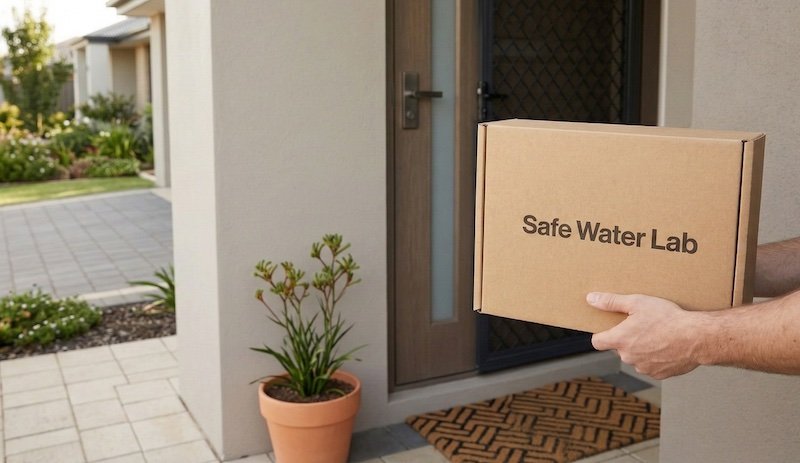
We mail you a testing kit complete with laboratory testing bottles and step by instruction of how to collect your sample.
-
Step 2 - Collect a water sample
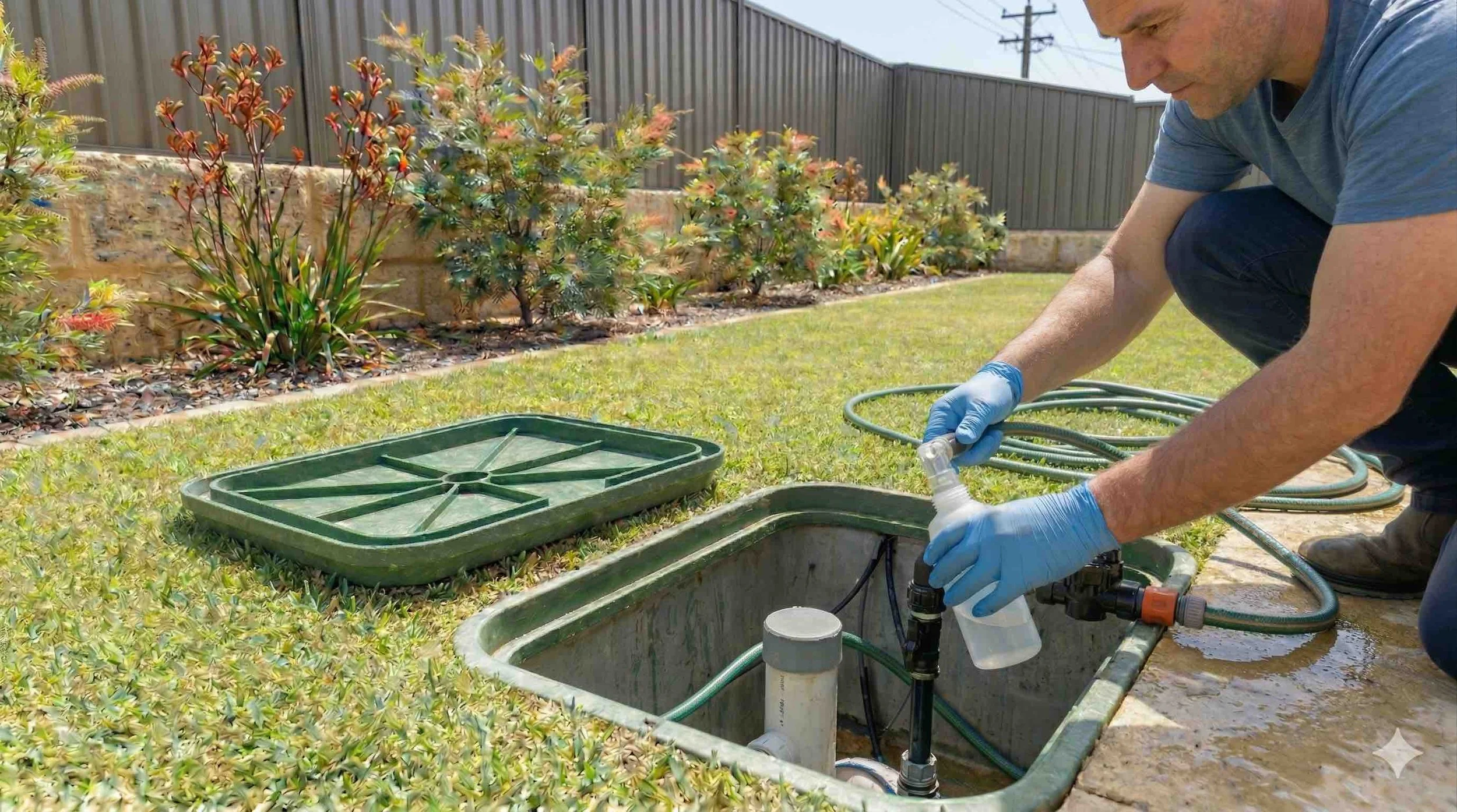
Fill the supplied laboratory testing bottles with a sample of your bore, dam or irrigation water. Place the bottles in the supplied postage parcel complete with pre-paid express shipping return label and place in post.
-
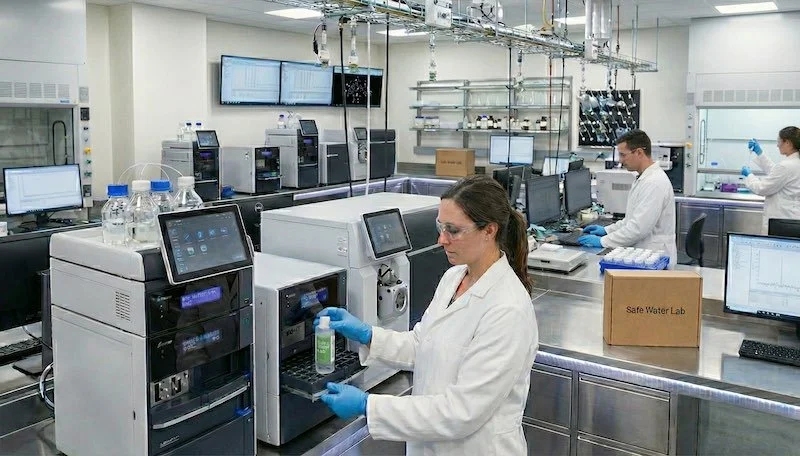
Step 3 - Laboratory Testing
Your water sample will be sent to a NATA accredited Australian laboratory for testing. Our laboratory partners typically complete the analysis within 5 business days.
-
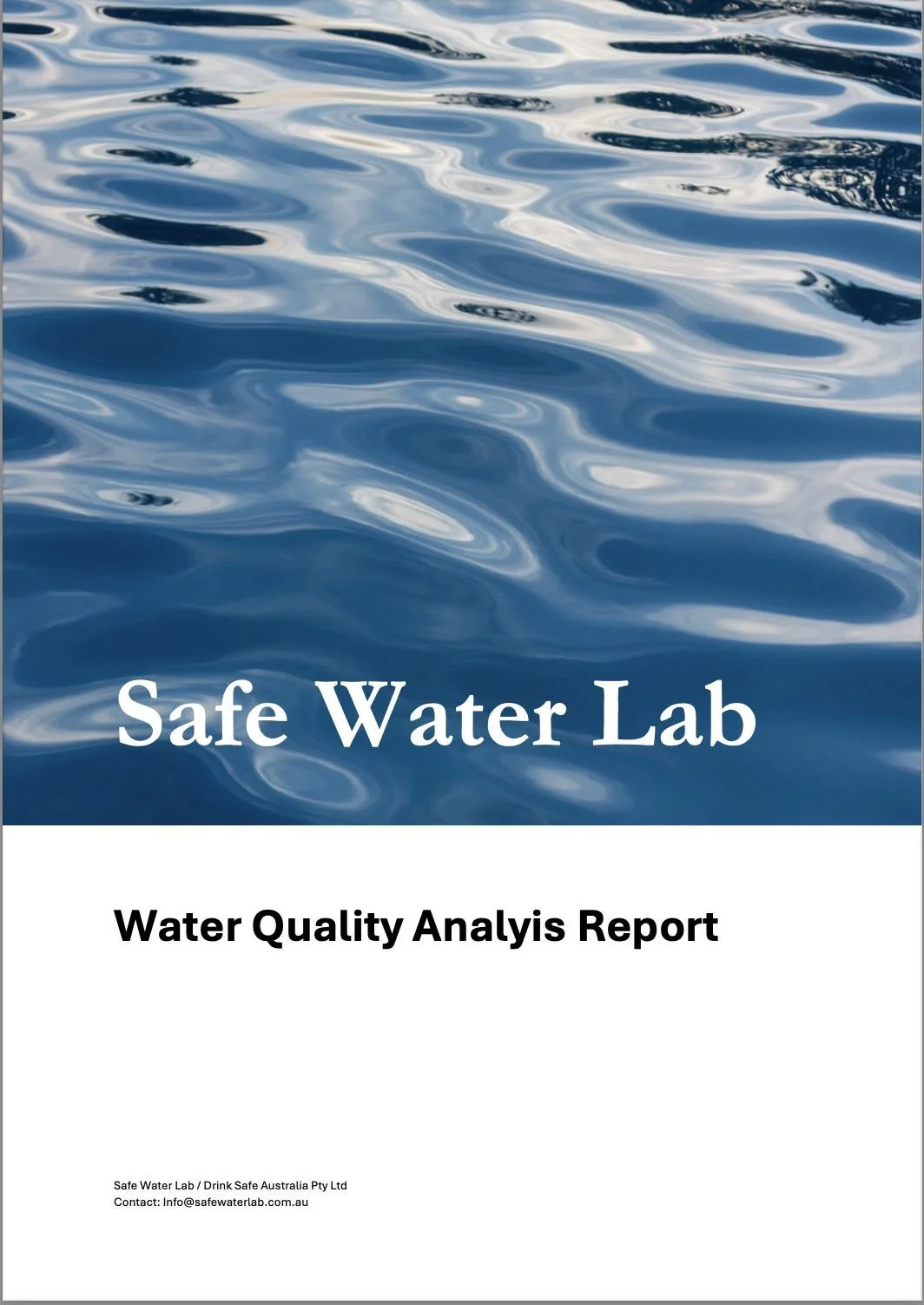
Step 4 - Receive your results
Your detailed Water Quality Analysis Report is delivered as a digital PDF — plain-English results benchmarked against Australian irrigation guidelines, with the original NATA-accredited Certificate of Analysis included.
Your Report
Your results are summarised and compared against ANZECC/ARMCANZ 2000 irrigation water quality guideline values. Each parameter is assessed relative to the published guideline level and reported as below, approaching, or exceeds.
Where a parameter approaches or exceeds a guideline level, a brief factual note describes the physical effect associated with that concentration range in irrigation contexts.
- Results compared against ANZECC/ARMCANZ 2000 irrigation guideline values
- Each parameter reported as below, approaching, or exceeds the guideline level
- Guideline value shown alongside your result for each parameter
- Factual notes for any parameter approaching or exceeding a guideline level
- NATA-accredited laboratory certificate of analysis included
| Parameter | Result | Guideline | Status |
|---|---|---|---|
| EC | 1,450 µS/cm | 800 µS/cm | Approaching |
| Iron | 1.8 mg/L | 0.3 mg/L | Exceeds |
| Manganese | 0.08 mg/L | 0.2 mg/L | Below |
| pH | 7.4 | 6.5–8.5 | Below |
| Total Hardness | 285 mg/L | 200 mg/L | Approaching |
| Sodium | 210 mg/L | 460 mg/L | Below |
| SAR (calc.) | 4.2 | 6.0 | Below |
Irrigation Water - Common Questions
Your kit arrives with a pre-labelled sample bottle, a pre-paid return satchel, and a one-page sampling instruction card. Collection takes about two minutes — run your bore for a few minutes to flush the line, then fill the bottle directly from the outlet. Seal, place in the satchel, and drop it at any Australia Post outlet.
If you've added the E. coli screen, your kit also includes an insulated sample bag and ice pack. The microbiology sample must be returned via express post on the same day to meet the 24-hour holding time requirement.
Most bore water quality issues are invisible at the tap. Elevated salinity, sodium, boron, and bicarbonate — all of which stress plants or degrade soil structure over time — have no visible colour, odour, or taste. The damage accumulates slowly across irrigation seasons before it becomes obvious.
Iron staining and rotten-egg smell are the exceptions — those are detectable without testing. But they represent only two of the twenty-one parameters in this screen.
Filter and bore companies typically offer in-house testing as part of their sales process. The analysis is often limited to a few parameters relevant to filter selection, and the result is used to recommend a treatment system.
Safe Water Lab is independent — we have no filter products to sell and no commercial interest in your result. Your sample goes to a NATA-accredited third-party laboratory, and your report is benchmarked against ANZECC/ARMCANZ 2000 irrigation guideline values, not a proprietary scale. You get the result as it is.
No. The Garden Bore Screen is designed for garden irrigation use only. Results are benchmarked against ANZECC/ARMCANZ 2000 irrigation water quality guideline values — not the Australian Drinking Water Guidelines (ADWG).
If you or your household are drinking from this bore, you need a separate drinking water assessment. See our bore water safety kits →
Each result is compared to the published ANZECC/ARMCANZ 2000 guideline value for that parameter and reported factually as:
Below guideline — your result is within the published reference range for that parameter.
Approaching guideline — your result is elevated relative to the guideline and warrants awareness.
Exceeds guideline — your result is above the published guideline value for that parameter.
These are factual comparisons, not declarations of suitability or safety. The ANZECC/ARMCANZ guidelines themselves describe these as reference trigger values, not mandatory standards. Where a result approaches or exceeds a guideline level, your report includes a brief factual note on the physical effect associated with that concentration range.
Results are benchmarked against the ANZECC/ARMCANZ 2000 Australian and New Zealand Guidelines for Fresh and Marine Water Quality, Chapter 9.2 — Water Quality for Irrigation and General Uses. These are the national reference guidelines for irrigation water quality in Australia.
Where no specific ANZECC irrigation guideline exists for a parameter, the report notes this and uses the best available published reference value. The SAR (Sodium Adsorption Ratio) is calculated from your measured sodium, calcium, and magnesium results.
If you're using bore water solely for lawn and ornamental garden irrigation with no direct contact between the water and edible produce, the standard Garden Bore Screen is sufficient.
If you're irrigating a vegetable patch, herb garden, fruit trees, or any food-producing plants — particularly with overhead sprinklers that wet edible portions — we recommend adding the E. coli screen. Bore water has no disinfection treatment and faecal contamination from nearby septic systems, animal activity, or bore casing failure is not detectable by appearance or smell.
Your report includes a factual note for each parameter that approaches or exceeds a guideline level, describing the physical effect associated with that concentration range. This gives you the information to make your own decisions.
For treatment options, we recommend consulting a licensed water treatment specialist or bore technician who can assess your specific setup. Safe Water Lab does not recommend specific products or suppliers.
We recommend retesting annually, or sooner if you notice any change in your bore — reduced flow, new odour, discolouration, or following nearby construction, heavy rainfall, or any work on the bore itself. Groundwater quality can shift seasonally, particularly in shallow superficial aquifers.
Yes — we service all of Australia. Kits are dispatched from our fulfilment partner and returned via Australia Post. If you're in a remote area with limited post office access, contact us before ordering and we can confirm logistics for your location.