Is Your Tank Water Safe?
NATA-accredited laboratory analysis, delivered to your door.
Trusted by households, farmstays, B&Bs, and rural properties across Australia.

How It Works
-
Step 1 - Select and purchase your test
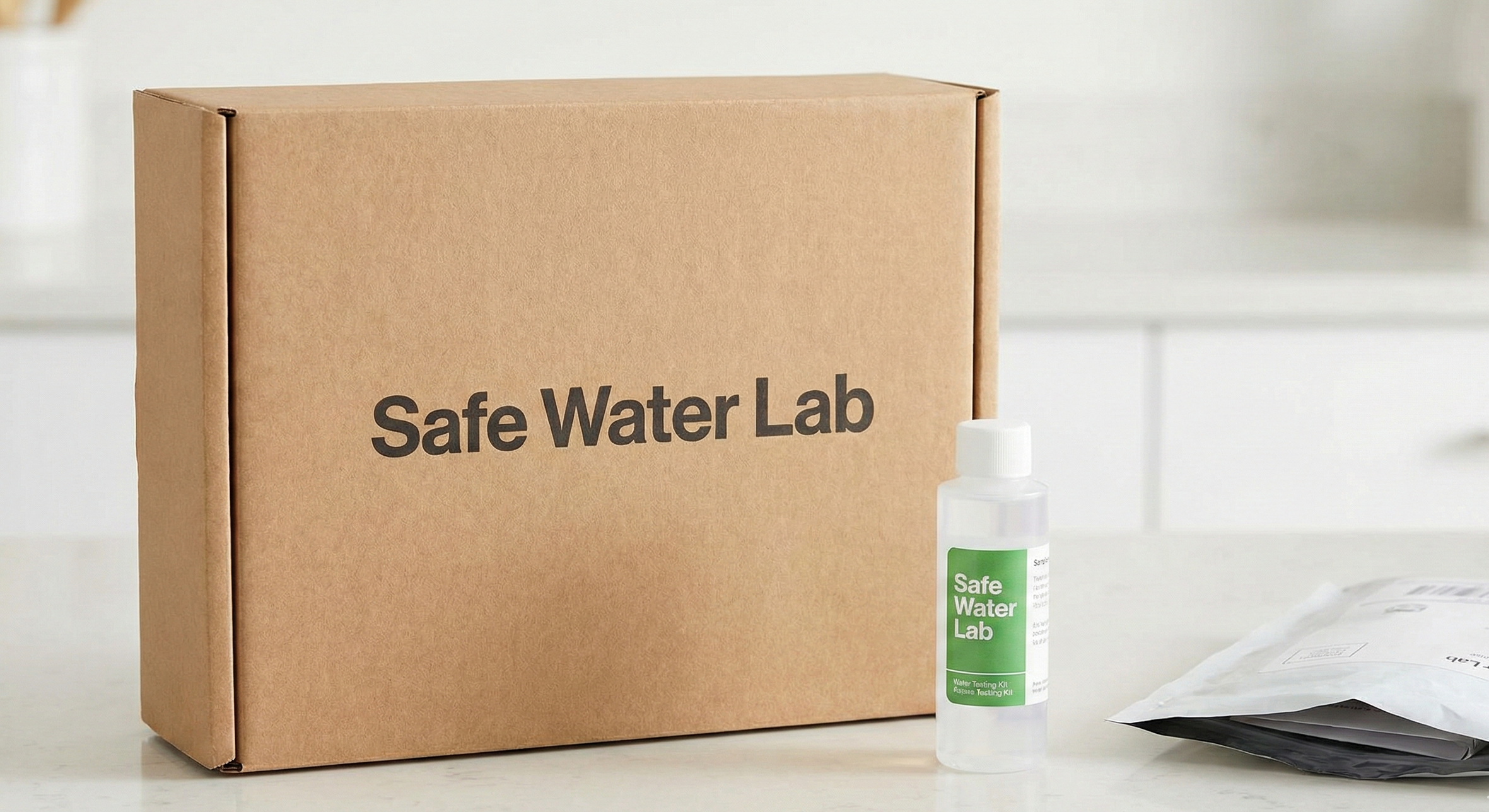
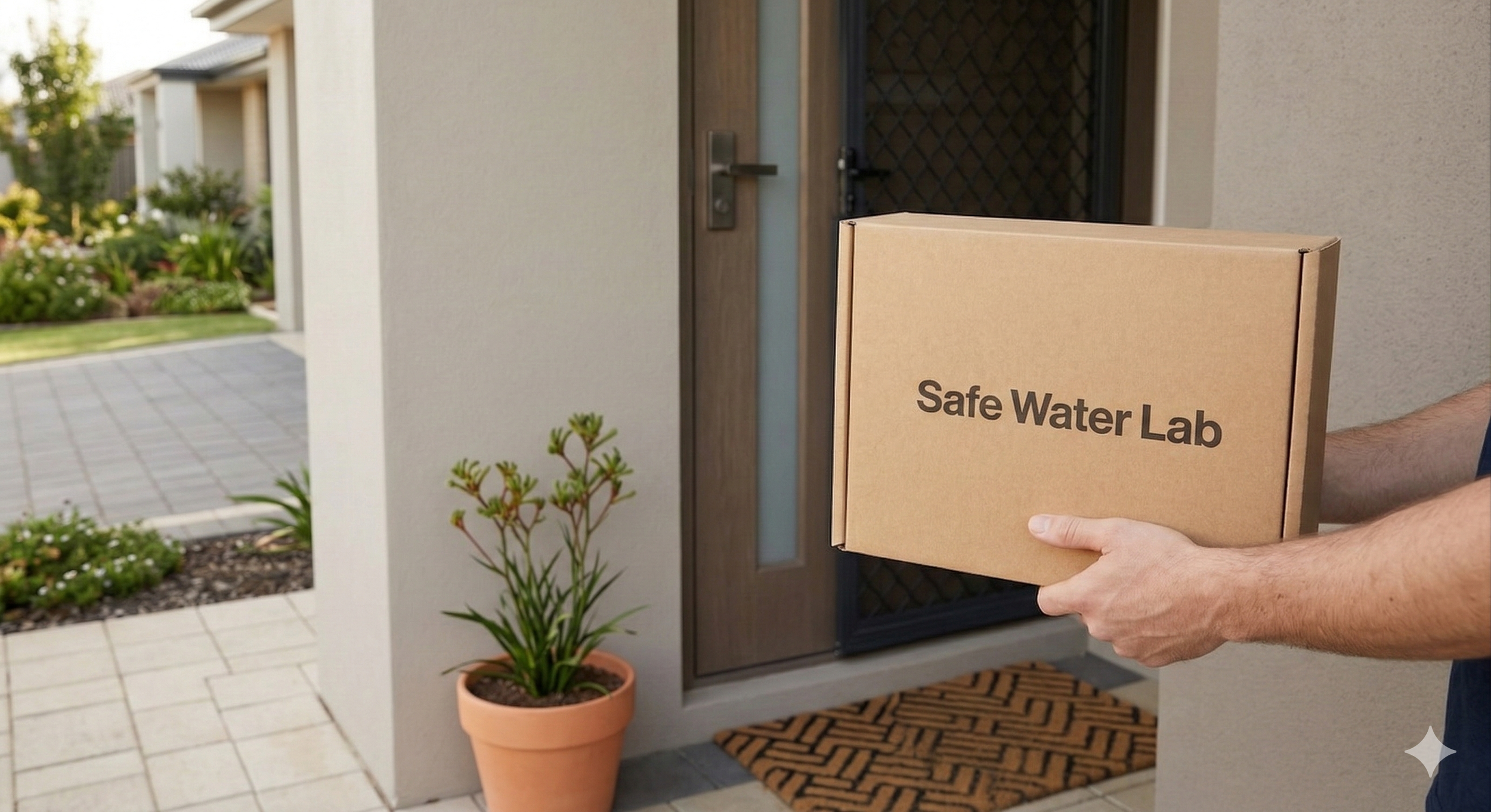
We mail you a testing kit complete with laboratory testing bottles and step by instruction of how to collect your sample.
-
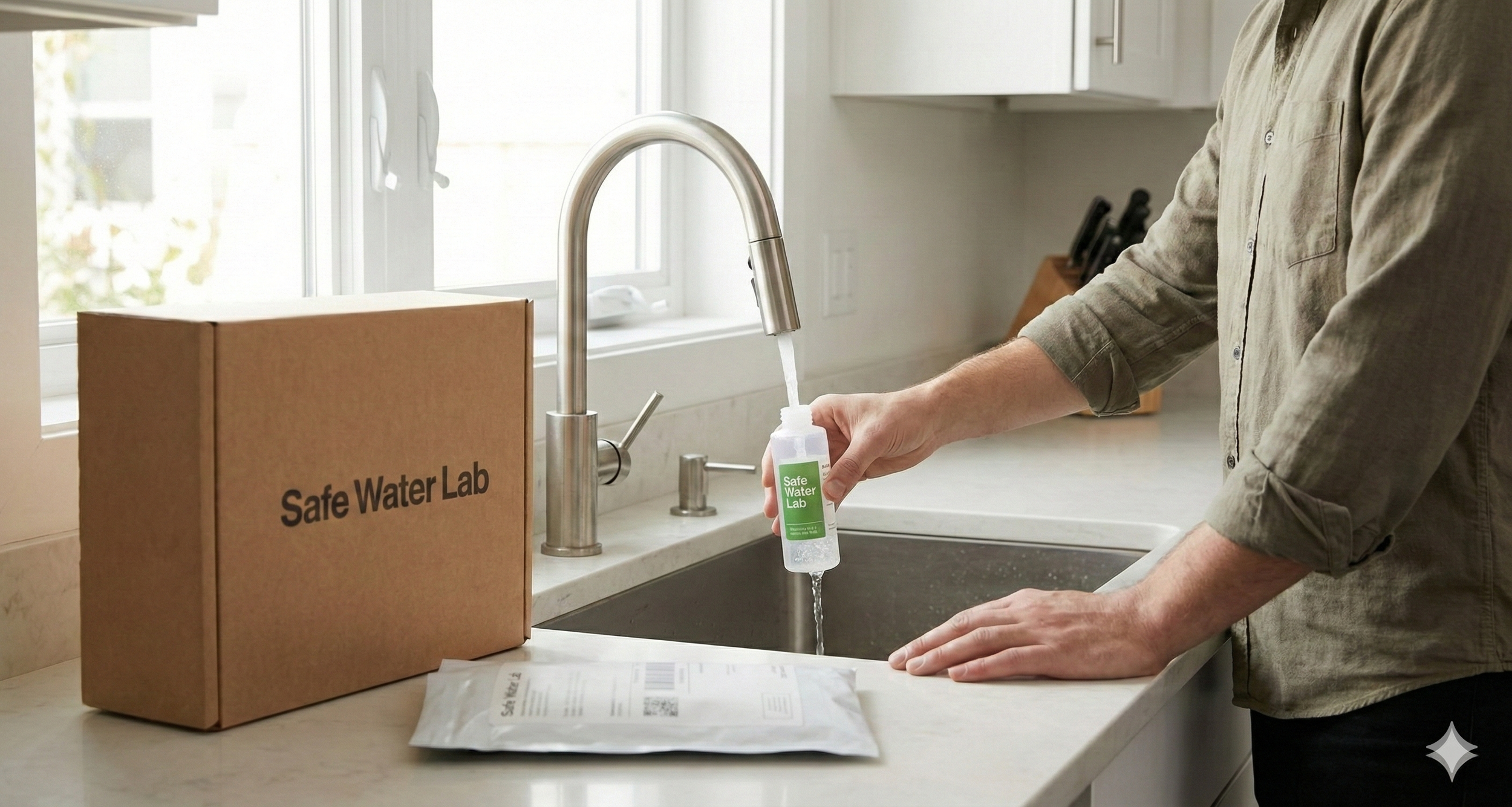
Step 2 - Collect a water sample
Fill the supplied laboratory testing bottles with a sample of your drinking water. Place the bottles in the supplied postage parcel complete with pre-paid express shipping return label and place in post.
-
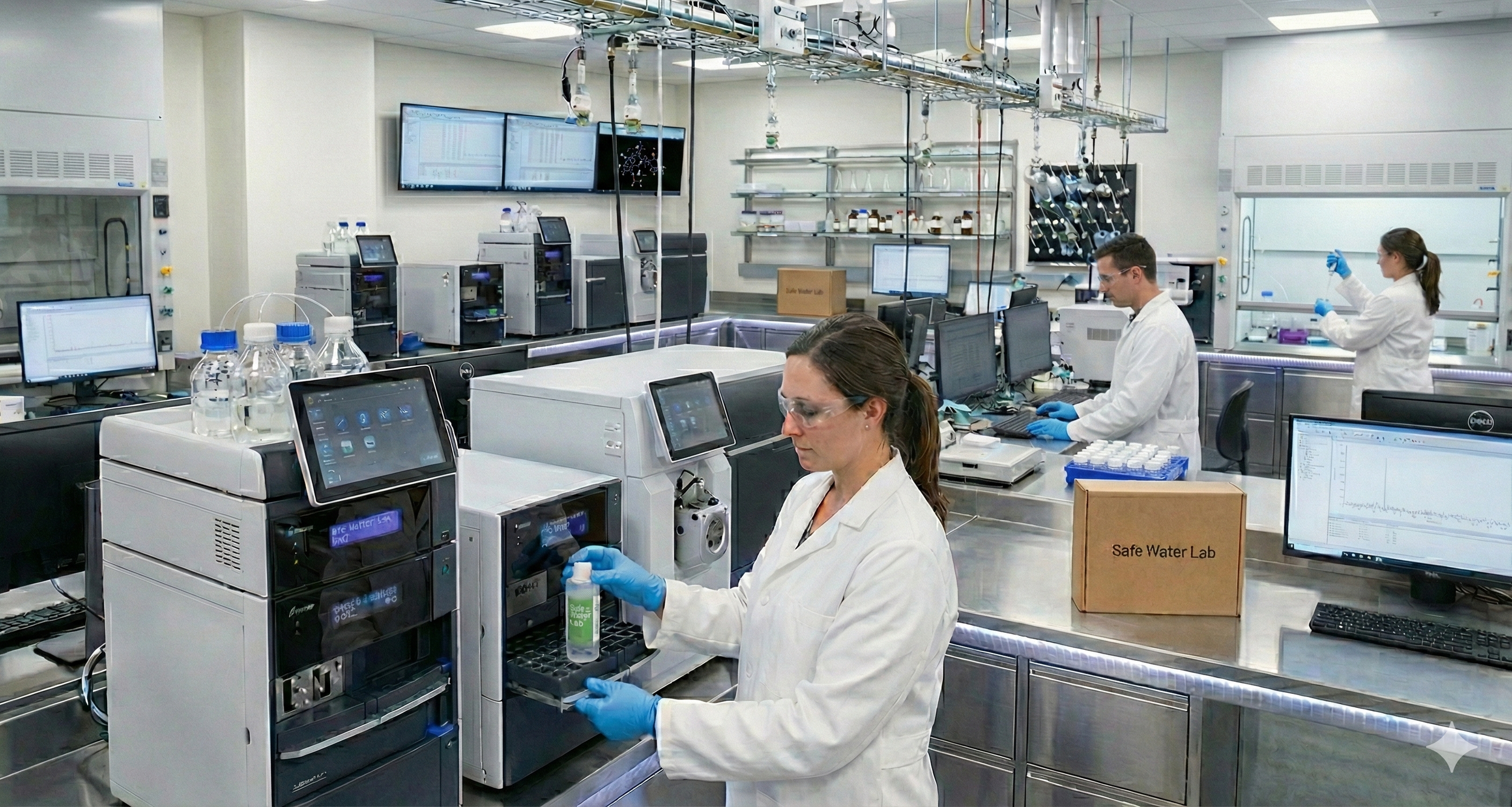
Step 3 - Laboratory Testing
Your water sample will be sent to a NATA accredited Australian laboratory for testing. Our laboratory partners typically complete the analysis within 5 business days.
-

Step 4 - Receive your results
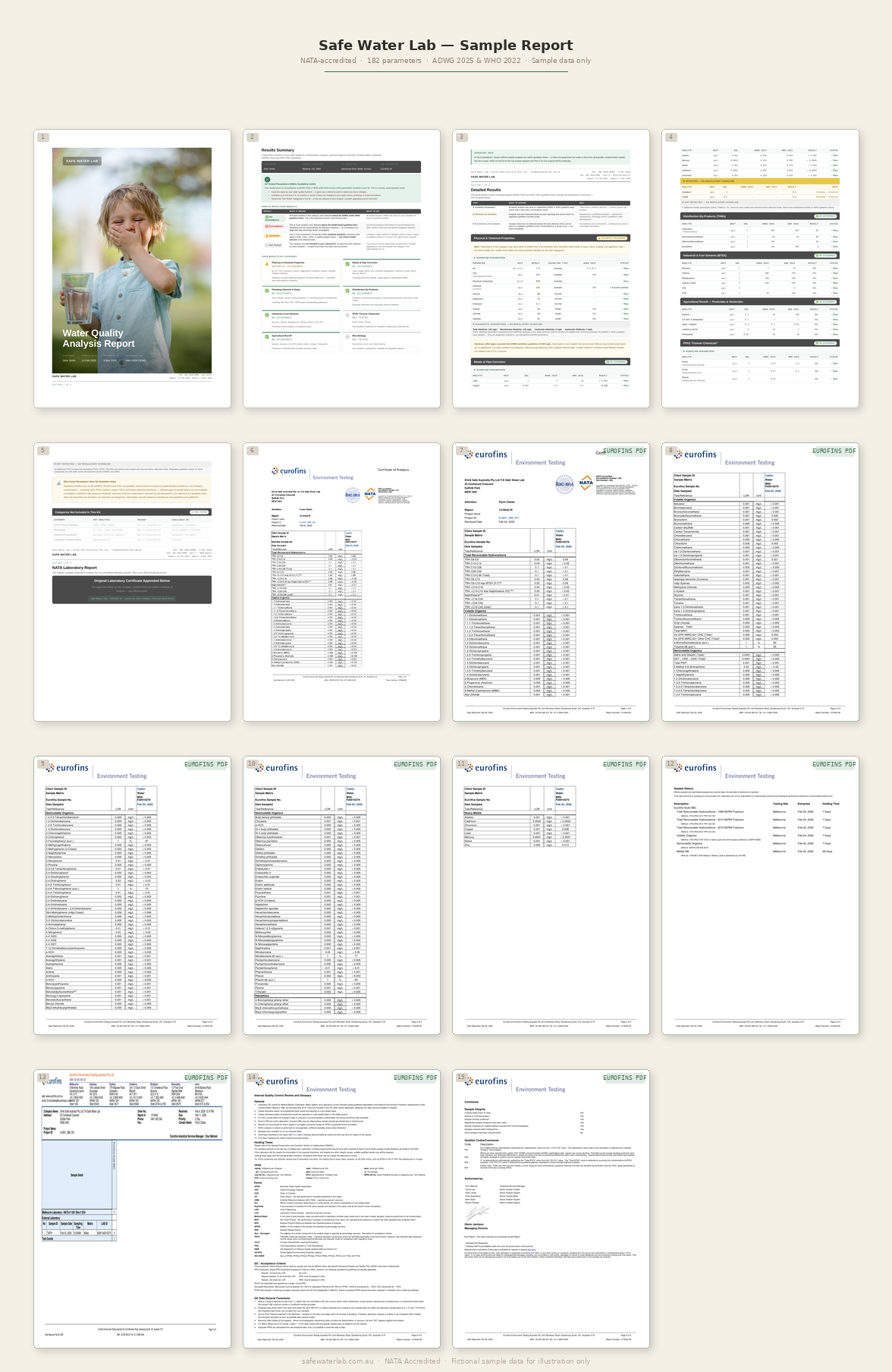
Your detailed Water Quality Analysis Report is delivered as a digital PDF — plain-English results benchmarked against Australian drinking water guidelines, with the original NATA-accredited Certificate of Analysis included.
What We Screen For
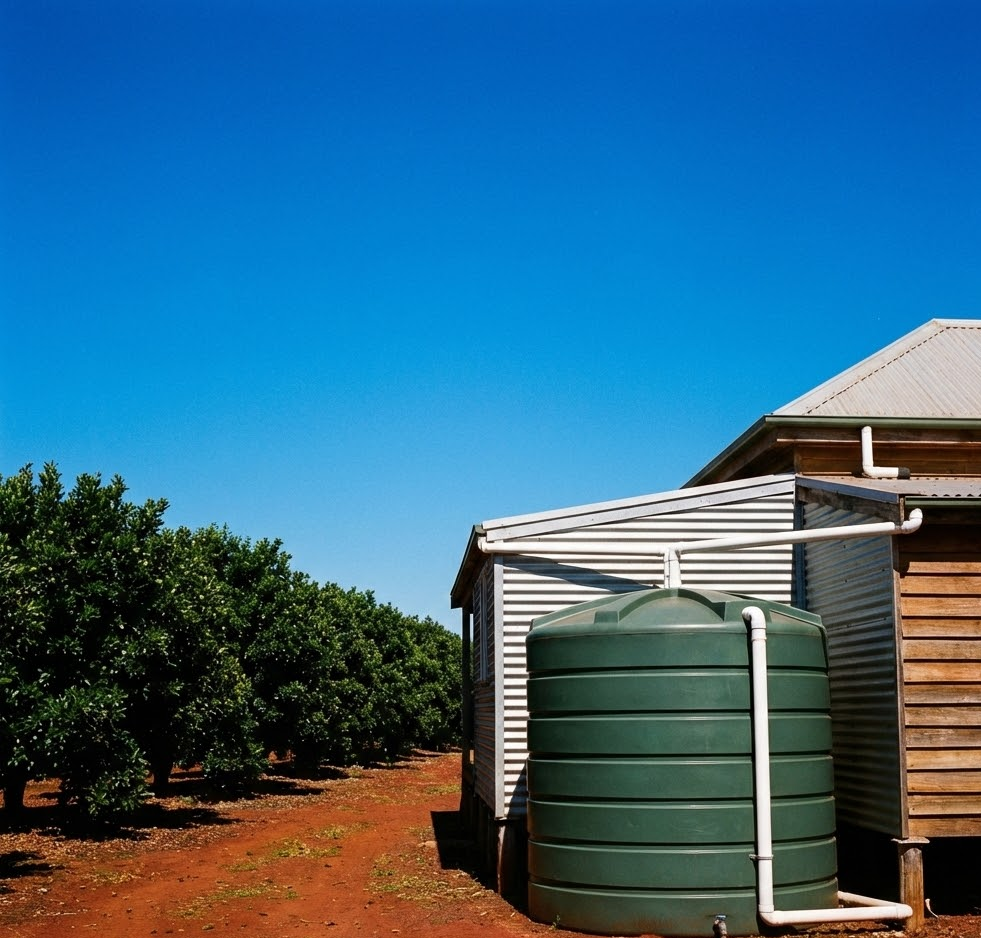
Rainwater tanks have no disinfection and no regulatory monitoring. What's in your tank depends entirely on your roof, your gutters, and what's in the air above your property.
Four testing levels to match your concerns
| 01Microbiology — The Primary Risk | ||||
| E. coli & Thermotolerant ColiformsFaecal indicator bacteria — enters through bird and possum droppings, leaf litter, and inadequate first-flush diversion. Tank water has no disinfection residual to suppress bacterial growth. | ✓ | ✓ | ✓ | ✓ |
| 02Roof & Gutter Metal Leaching | ||||
| 18 metals & metalloids — incl. Lead, Zinc & CopperLead (flashing and solder joints), Zinc (galvanised roofing), Copper (gutters and downpipes), Arsenic, Cadmium, Chromium, Mercury, Nickel, Iron, Manganese, Barium, Cobalt, Silver + more. Leaching is highest in the first flush after dry periods. | ✓ | ✓ | ✓ | ✓ |
| 03Nutrients from Animal Waste | ||||
| Nitrate, Nitrite & AmmoniaFrom bird and possum droppings, decomposing leaf litter, and organic debris in gutters. Elevated nutrients also promote bacterial growth inside the tank, compounding microbial risk. | ✕ | ✓ | ✓ | ✓ |
| 04Physical & Aesthetic Quality | ||||
| Turbidity & pHTurbidity from sediment and poor first-flush diversion. pH from rainwater acidity — low pH accelerates metal leaching from tank linings and plumbing. | ✓ | ✓ | ✓ | ✓ |
| Apparent ColourTannin staining from leaf litter and organic debris — one of the most common tank water complaints. | ✕ | ✓ | ✓ | ✓ |
| UV Transmittance (254nm)Measures dissolved organic carbon that affects UV disinfection system performance. A result below 75% indicates your UV system may not be operating at rated effectiveness — useful for households with UV treatment installed. | ✕ | ✓ | ✓ | ✓ |
| 05Mineral Balance & Water Chemistry | ||||
| 14 physical & chemical parametersEC, TDS, Hardness, Total Alkalinity, Bicarbonate, Carbonate, Hydroxide Alkalinity, Calcium, Magnesium, Sodium, Potassium, Chloride, Sulphate. Rainwater is naturally soft and acidic — low mineral content makes it more corrosive to fittings and appliances. | ✕ | ✓ | ✓ | ✓ |
| 06Pesticides, Insecticides & Herbicide Spray Drift | ||||
| 55 pesticides & insecticides at trace detection levelOrganochlorines — Dieldrin, DDT, Heptachlor, Lindane, Endosulfan + others. Organophosphates — Diazinon, Chlorpyrifos, Malathion + others. Persist in water and not removed by standard filtration. | ✕ | ✕ | ✓ | ✓ |
| 10 triazine herbicides at trace detection levelAtrazine, Simazine, Propazine, Terbuthylazine + 6 others. Among the most commonly detected agricultural chemicals in tank water via spray drift. | ✕ | ✕ | ✓ | ✓ |
| 07PFAS — "Forever Chemicals" | ||||
| 30 PFAS compounds at trace detection levelPFOS, PFOA, PFHxS, PFNA + 26 precursors at 0.001–0.005 µg/L. Enters tank water near defence bases, airports, and industrial sites through atmospheric deposition. The 2025 ADWG tightened limits by up to 94%. | ✕ | ✕ | ✕ | ✓ |
| What's Included | ||||
| Complete sampling kit delivered to your door | ✓ | ✓ | ✓ | ✓ |
| Pre-paid express cold-chain return shipping | ✓ | ✓ | ✓ | ✓ |
| NATA-accredited laboratory analysis (No. 1261) | ✓ | ✓ | ✓ | ✓ |
| Colour-coded PDF report benchmarked against ADWG | ✓ | ✓ | ✓ | ✓ |
| Plain-language exceedance explanations | ✓ | ✓ | ✓ | ✓ |
| Total parameters tested | ~23 | ~38 | ~104 | ~134 |
What's actually in my rainwater — and is it safe for my family?
Order Now — A$499Could spray drift from nearby farms be in my tank water?
Order Now — A$749Is there PFAS in my tank water from a nearby base or airport?
Order Now — A$949Every contaminant class in a single kit — metals, PFAS, pesticides, herbicides, VOCs, PAHs, microbiology, nutrients, and disinfection by-products. Trace-level detection throughout. Works on any water source.
Lead, copper, zinc, arsenic, mercury, chromium and 12 more — standalone screen for roof and gutter catchment contamination pathways.
PFOS, PFOA, PFHxS + 27 precursors at trace detection (0.001–0.005 µg/L). For properties near defence bases, airports, or industrial sites.
PE, PP, PS, PVC, PET, PC, PMMA, PA particle counts in potable water. No safe limit has been set under the ADWG — we report what's present so you can make an informed decision.
All analysis performed by NATA-accredited laboratories under ISO/IEC 17025:2017 · All prices include GST · Cold-chain return shipping included