How It Works
-
Step 1 - Select and purchase your test
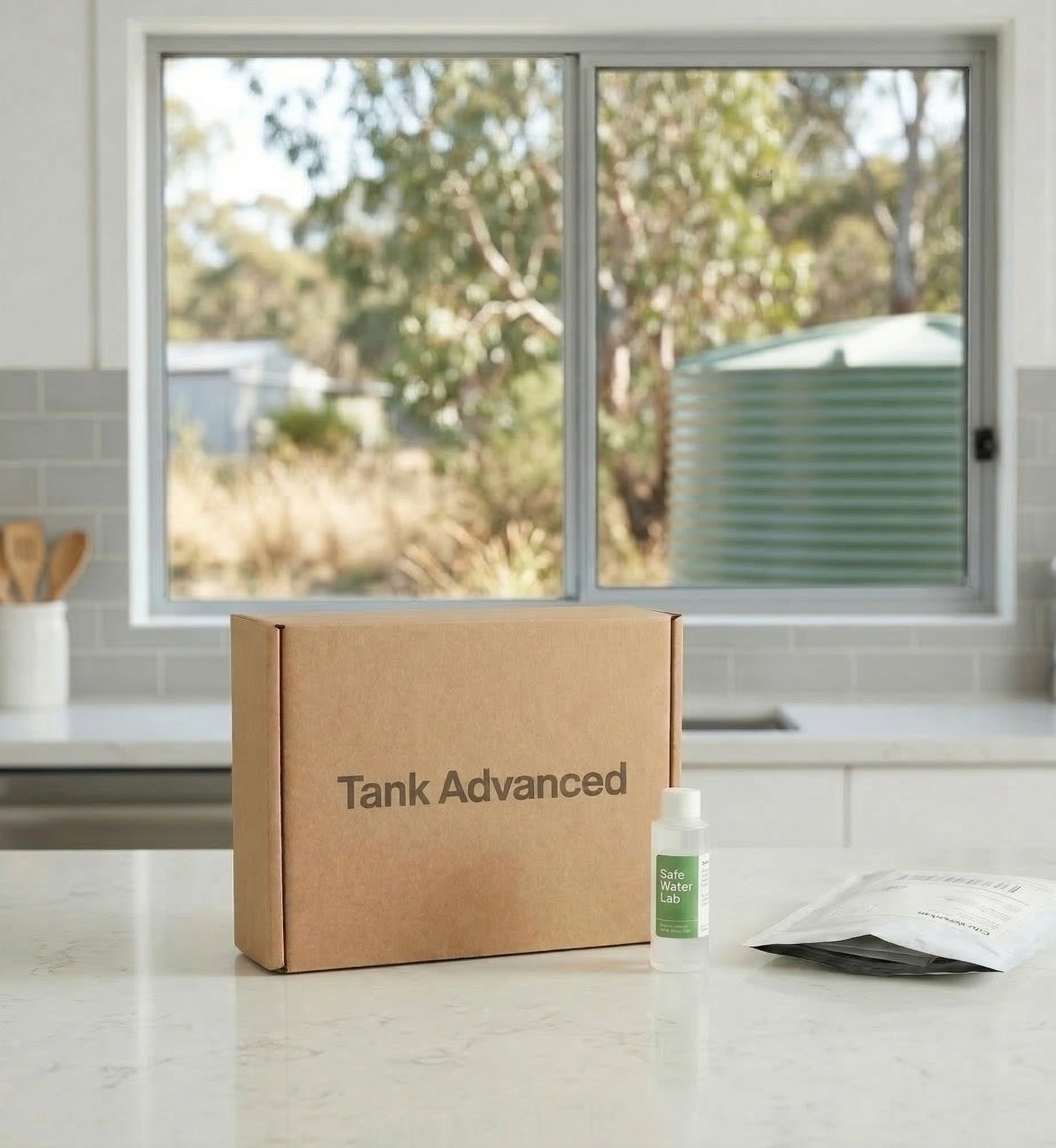
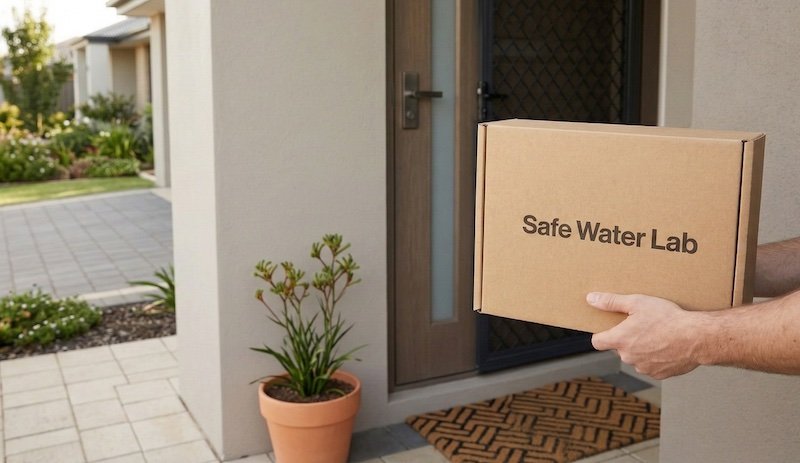
We mail you a testing kit complete with laboratory testing bottles and step by instruction of how to collect your sample.
-
Step 2 - Collect a water sample
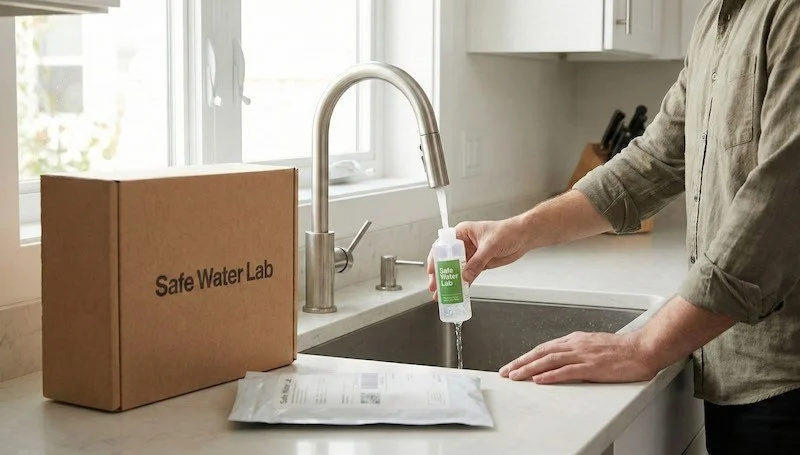
Fill the supplied laboratory testing bottles with a sample of your drinking water. Place the bottles in the supplied postage parcel complete with pre-paid express shipping return label and place in post.
-
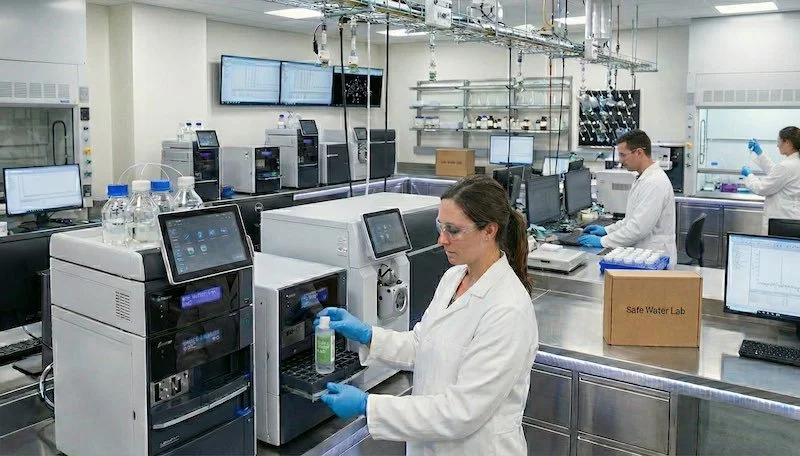
Step 3 - Laboratory Testing
Your water sample will be sent to a NATA accredited Australian laboratory for testing. Our laboratory partners typically complete the analysis within 5 business days.
-
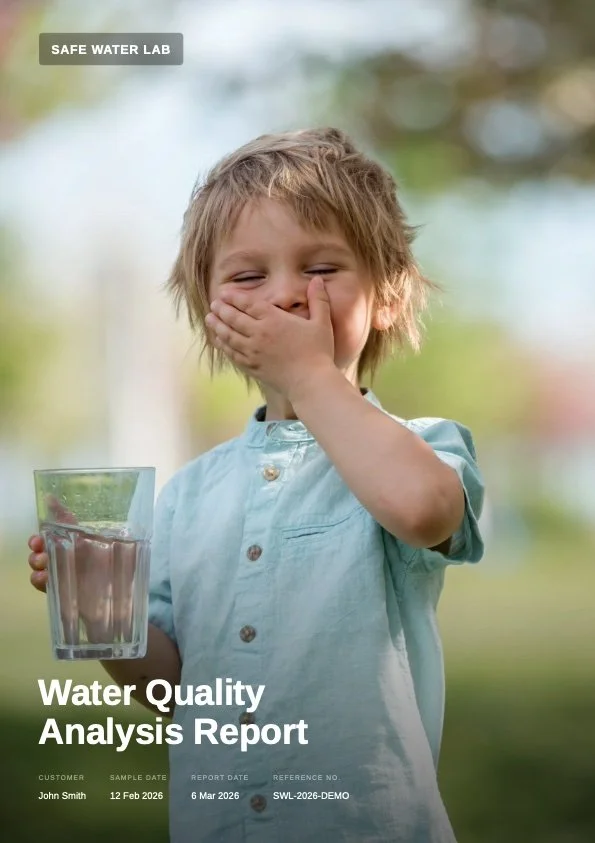
Step 4 - Receive your results
Your Water Quality Analysis Report is delivered as a digital PDF — prepared by an environmental scientist, with results benchmarked against Australian and international water quality guidelines, and the original NATA-accredited Certificate of Analysis included.
What We Test
- E. coli and bacteria from bird and possum droppings
- Lead, copper and zinc leaching from roof flashings and gutters
- PFAS from atmospheric deposition near airports and defence sites
- Pesticides and herbicides from agricultural spray drift
- pH and mineral balance — how corrosive your water is to pipes
- Turbidity and colour — sediment and tannin staining
- Hardness and TDS — taste, scale, and appliance impact
- UV transmittance — whether your UV system is actually working
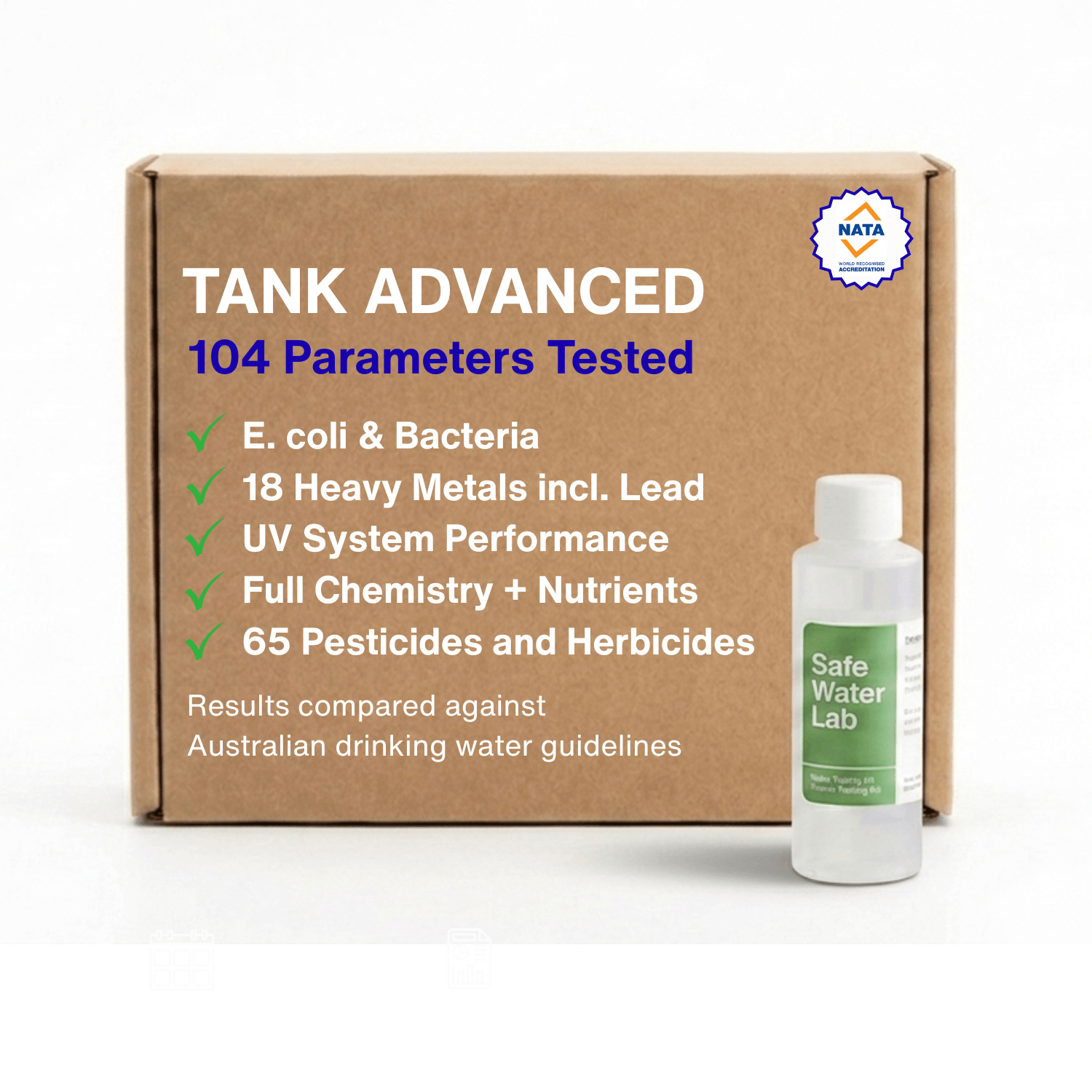
Which tank water kit is right for you?
Every kit screens the harmful contaminants relevant to its tier. Step up only if you want broader coverage of taste, appearance, agricultural chemicals, or PFAS.
Your Report
More than just numbers. Every Safe Water Lab kit comes with a full Water Quality Analysis Report — written by an environmental scientist, in plain English, designed for actual decision-making.
Each report includes:
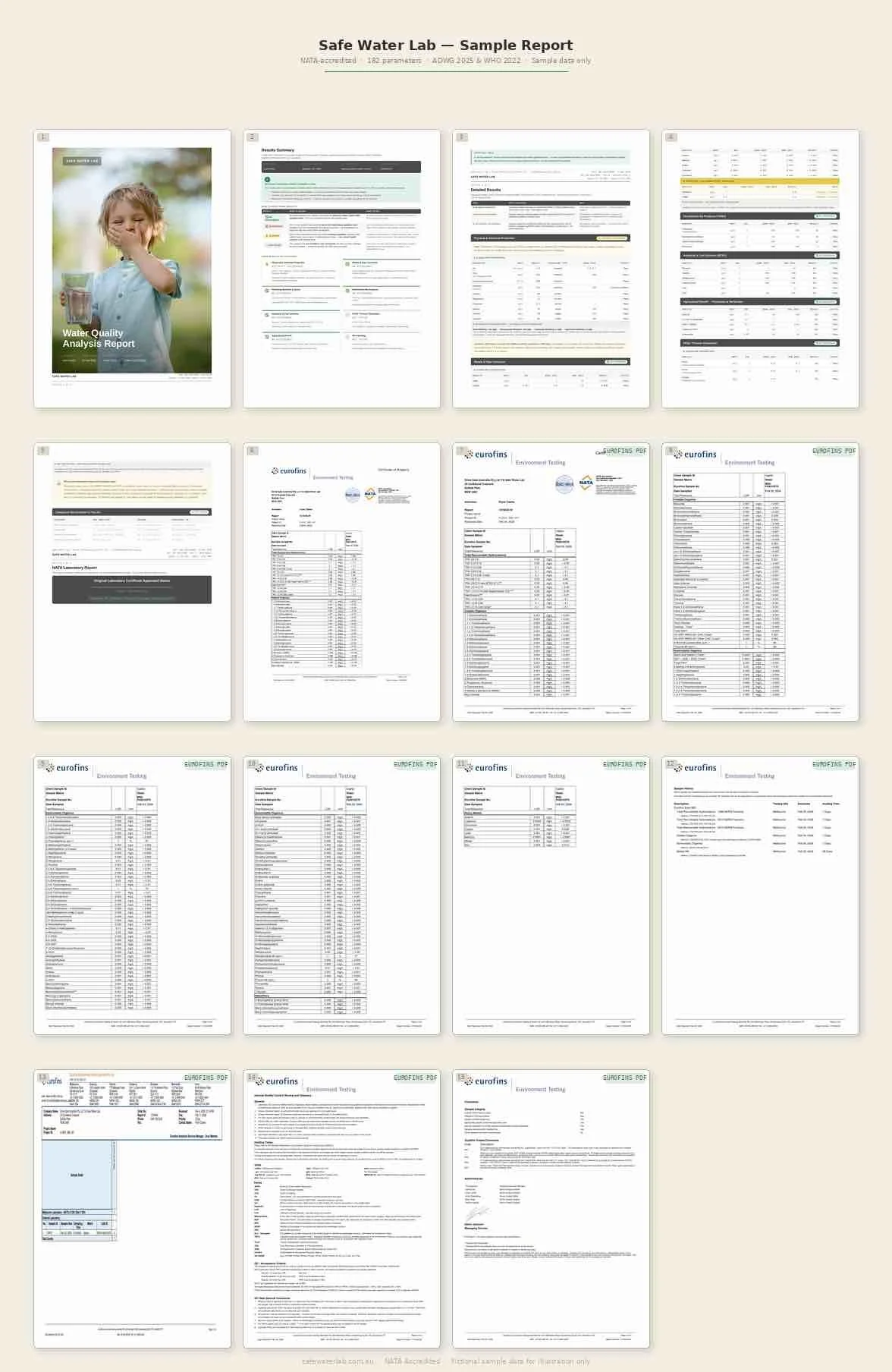
Results Summary at a Glance - A one-page overview grouping every result by contaminant category — microbiology, heavy metals, physical-chemical, nutrients, organics — with a pass/fail status against the Australian Drinking Water Guidelines (ADWG 2025). Know where you stand in 60 seconds.
Detailed Results, Plainly Explained - Every analyte compared against the ADWG and WHO guideline values. Where a parameter exceeds a guideline, we explain what it means, what's likely causing it, and what level of concern is warranted — in language that doesn't require a chemistry degree.
Clear Next Steps for Any Exceedance - If we find something above guideline, you get a specific recommendation. Source-level fixes (clean the gutters, replace lead flashing, address first-flush diversion). Behavioural changes (boil before drinking, switch to bottled for infant formula). And where relevant, filtration guidance — what type of treatment would address the issue. Because we don't sell filters, the advice is genuinely independent.
NATA-Accredited Certificate of Analysis - The original Certificate from our partner laboratory. Auditable, traceable, defensible — suitable for council, insurance, or commercial supply documentation for farmstays, B&Bs and schools.
Questions Answered Directly - Reply to your report email and a scientist will answer. No call centres, no scripts, no upsells.
Independent Testing Run by Environmental Scientists
We test rainwater tank water for the contaminants that actually matter — bacteria from roof catchment, metals leaching from flashing and gutters, PFAS from atmospheric deposition, and pesticide drift from surrounding land. Many of these aren't routinely included in other water tests on the market. Your results are interpreted by environmental scientists and benchmarked against the Australian Drinking Water Guidelines, so you can make an informed decision about your water.
We don't sell filtration systems, water softeners, or treatment products. Our job is to give you an accurate picture of what's in your water — what you do next is up to you. Many of our customers don't need any treatment at all once they see the results.
E. coli and thermotolerant coliforms cultured under accredited method. Lead, copper, and zinc quantified to µg/L. PFAS detected to 0.001 µg/L — well below current Australian guideline values. Pesticides and herbicides at trace level. The full picture, at the accuracy required to make decisions.
Safe Water Lab is operated by environmental scientists with backgrounds in water quality and contaminated land. Every kit is specified for tank water — we test for the contaminants that actually matter, choose the right test method and detection limit for each one, and write sampling instructions so the result reflects what's really in your tank. Every report is read by someone who understands what the numbers mean, before it reaches you.
Every result is colour-coded and compared against the Australian Drinking Water Guidelines. Where a parameter exceeds a guideline, we explain what it means, what's likely causing it, and what your options are — in plain English.
- ✕Cannot detect PFAS, pesticides, or solvents
- ✕Lead detection limits 100× higher than the guideline
- ✕No measurement of bacteria — only chlorine residual, which tank water lacks anyway
- ✕Colour-match accuracy varies by user and lighting
- ✓Up to 134 parameters at trace detection levels
- ✓Lead, copper, and 16 other metals quantified to µg/L
- ✓E. coli and thermotolerant coliforms cultured under accredited method
- ✓Results signed off by an accredited laboratory — auditable, traceable, defensible
Test strips are useful for swimming pools and aquariums. For drinking water that contains contaminants at parts-per-billion concentrations, you need a laboratory.
“We used this kit to check our rainwater for E. coli and heavy metals to ensure our filters were doing their job. Testing was incredibly easy, and the clear results gave us the confidence we were looking for.”
— M.C., St Andrews, VicTank Water - Common Questions
-
The Australian residential water filter market operates without mandatory product certification or independent performance verification. Manufacturers are not required to substantiate contaminant removal claims before bringing a product to market — meaning the performance figures on the packaging are largely self-reported. A NATA-accredited laboratory baseline provides the only objective, scientifically defensible audit of whether your filtration system is performing as claimed, or creating a false sense of security.
-
It is incredibly simple. When your kit arrives, it includes step-by-step instructions. You simply fill the provided bottles from your tap, write the date on the included form, and place everything into the pre-paid express return mailer. Drop it at any Australia Post Express Post collection point, and you are done.
-
Our laboratory partner completes analysis within 5 business days of receiving your sample. Your report is typically delivered by email 1–2 business days after that. Total time from posting your sample to receiving results is around 7–9 business days depending on postal transit.
-
As a general guide, annual testing is appropriate for most household tanks used for drinking. You should also test after any significant event — a prolonged dry spell followed by heavy rain, roof repairs, storm damage, or if you notice any change in taste, colour, or odour. If you have young children, elderly residents, or immunocompromised people in the household, more frequent testing is warranted.
-
For most households, Tank Essentials covers the core risks — microbiology, metals from roof catchment, water chemistry, nutrients, and physical quality. If your property is rural or peri-urban with nearby cropping or horticulture, Tank Complete adds a 54-compound pesticide screen. If you are near a defence base, airport, or industrial site, Tank Advanced adds PFAS testing at trace detection levels.
-
For most operators, Essentials covers base ADWG compliance — microbiology, metals, core chemistry, and nutrients. If your property is near agricultural cropping or spray operations, Advanced adds pesticides and herbicides. If you're near a defence base, airport, or industrial site, Complete adds PFAS. Your local health district or council may specify which parameters they require — we can help match the kit to your regulator's testing schedule.