How It Works
-
Step 1 - Select and purchase your test
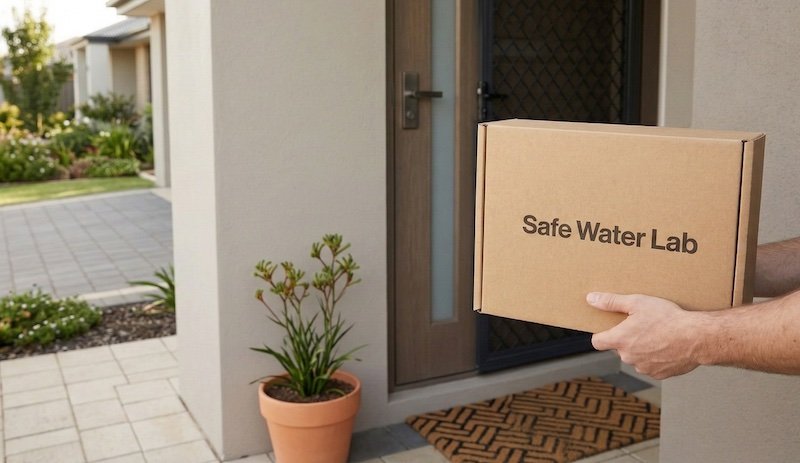
We mail you a testing kit complete with laboratory testing bottles and step by instruction of how to collect your sample.
-
Step 2 - Collect a water sample
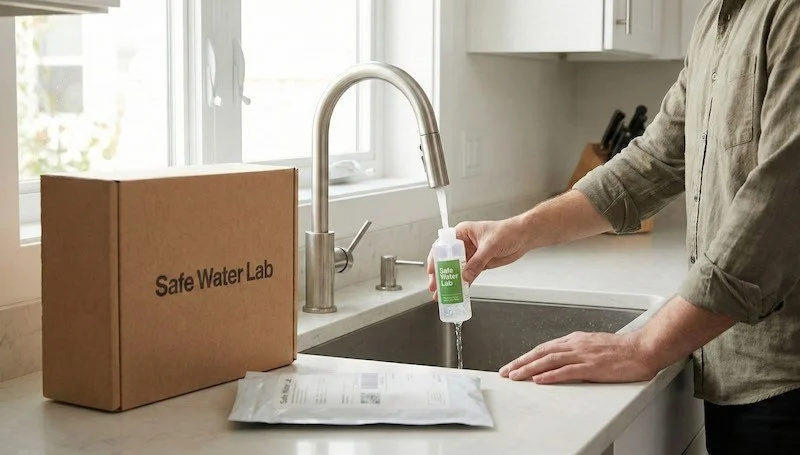
Fill the supplied laboratory testing bottles with a sample of your drinking water. Place the bottles in the supplied postage parcel complete with pre-paid express shipping return label and place in post.
-
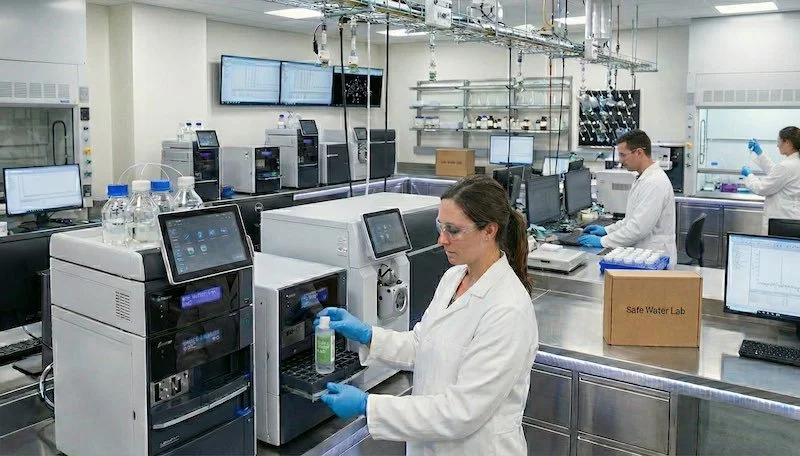
Step 3 - Laboratory Testing
Your water sample will be sent to a NATA accredited Australian laboratory for testing. Our laboratory partners typically complete the analysis within 5 business days.
-
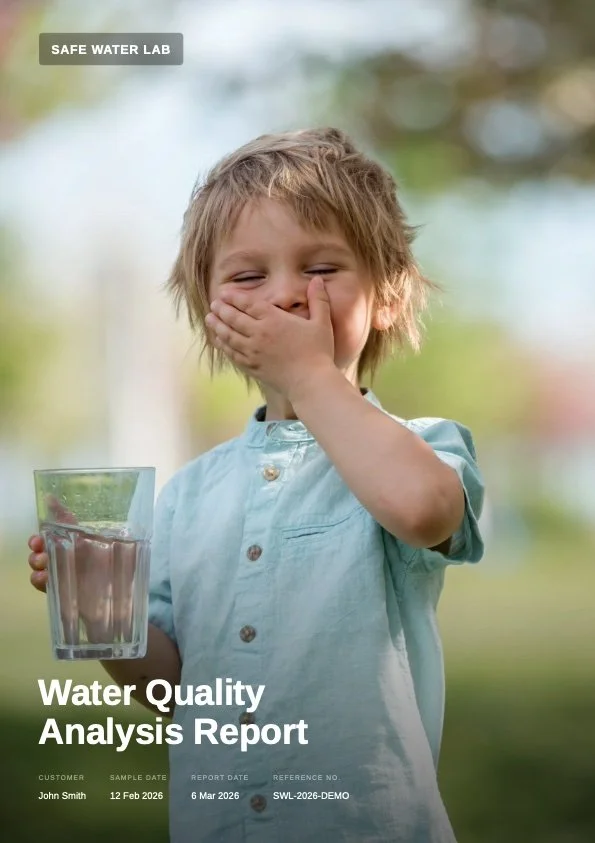
Step 4 - Receive your results
Your Water Quality Analysis Report is delivered as a digital PDF — prepared by an environmental scientist, with results benchmarked against Australian and international water quality guidelines, and the original NATA-accredited Certificate of Analysis included.
Your Report
The Clarity you need. Zero guesswork.
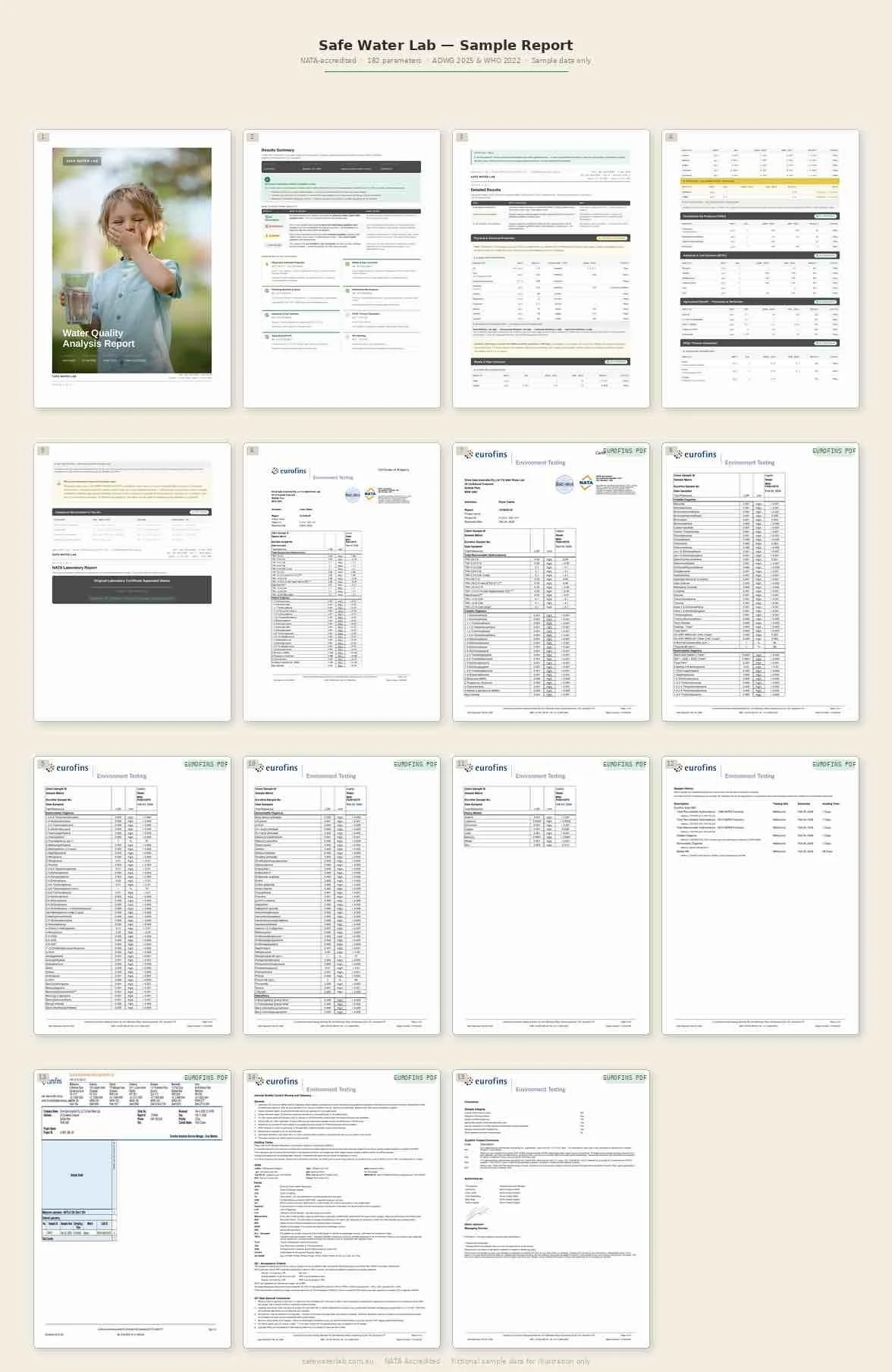
Every kit includes a Water Quality Analysis Report delivered as a digital PDF. Each report includes:
Results Summary — Colour-coded report card with pass/fail by contaminant category and next steps if you have an exceedance. Know where you stand in 60 seconds.
Detailed Results — All your results, compared against national and international drinking water safety limits and irrigation criteria.
Certificate — The original NATA-accredited Certificate of Analysis from the laboratory. Your official record.
What We Test
- Arsenic — naturally elevated across NSW, SA, WA, QLD
- Uranium and Fluoride — leach from granite and sedimentary rock
- Iron and Manganese — cause staining, taste and pump issues
- Hardness and salinity — affect taste, scale and corrosion
- Nitrate from fertilised land and septic systems
- PFAS from defence bases, airports and industrial sites
- Pesticides and herbicides — atrazine, simazine, organochlorines
- VOCs and solvents from historical industrial land use
- E. coli from compromised casings or septic ingress
Which bore water kit is right for you?
Not sure where to start? The Safety Screen answers the most important question first. Step up to Essentials for a complete water profile — and coverage for garden bore and irrigation use. Advanced and Complete add contamination screening for properties with specific site risk.
Independent Testing by Environmental Scientists
Bore water reflects two things — the geology it comes from, and decades of land use above it. We test for the contaminants that actually show up in Australian groundwater: nitrate, arsenic, fluoride and hardness from the aquifer itself; pesticides, PFAS and hydrocarbons from the surface. Results are benchmarked against the Australian Drinking Water Guidelines for drinking water, and ANZECC irrigation guidelines for stock and crops — so a single test answers both questions.
Bore water carries whatever the geology gives it. Nitrate, arsenic, fluoride, uranium, hardness, iron and manganese are all common in Australian groundwater — at concentrations that strips can't detect but the ADWG cares about. We test for the geological signature of your bore, not just what's easy to measure.
Bore water also reflects what's been on the surface for decades. Pesticides (atrazine, simazine, glyphosate, organochlorines), PFAS at trace level, hydrocarbons from old fuel storage, and nutrients from septic systems all infiltrate down through soil into groundwater. We test for the contamination most kits skip.
A single bore often supplies the kitchen tap and the paddock. We benchmark every result against both the Australian Drinking Water Guidelines (ADWG) and the ANZECC irrigation guidelines — the two frameworks that apply to the two uses. Most generic kits give you one. Bore water needs both.
Safe Water Lab is operated by environmental scientists with backgrounds in groundwater quality and contaminated land. Every kit is specified for bore water — we choose the right test method and detection limit for each contaminant, and write sampling instructions so the result reflects what's really in your bore. Every report is read by someone who understands what the numbers mean, before it reaches you.
- ✕Cannot detect PFAS, pesticides, or hydrocarbons
- ✕Arsenic and uranium not measurable at health-relevant levels
- ✕Nitrate strips read total nitrate-N only — no separation of nitrite or ammonia
- ✕No measurement of bacteria from shallow-bore surface contamination
- ✕No irrigation-specific parameters (SAR, chloride, bicarbonate, boron)
- ✓Up to 134 parameters at trace detection levels
- ✓Arsenic, lead, uranium and 15 other metals quantified to µg/L
- ✓Nitrate, nitrite, ammonia and TKN reported separately
- ✓E. coli and thermotolerant coliforms cultured under accredited method
- ✓Dual ADWG + ANZECC benchmarking on every drinking-bore report
Bore water can be excellent, marginal, or genuinely unsafe — and you can't tell which by looking at it. The only way to know is to measure.
Bore Water - Common Questions
-
The Australian residential water filter market operates without mandatory product certification or independent performance verification. Manufacturers are not required to substantiate contaminant removal claims before bringing a product to market — meaning the performance figures on the packaging are largely self-reported. A NATA-accredited laboratory baseline provides the only objective, scientifically defensible audit of whether your filtration system is performing as claimed, or creating a false sense of security.
-
It is incredibly simple. When your kit arrives, it includes step-by-step instructions. You simply fill the provided bottles from your tap, write the date on the included form, and place everything into the pre-paid express return mailer. Drop it at any Australia Post Express Post collection point, and you are done.
-
Our laboratory partner completes analysis within 5 business days of receiving your sample. Your report is typically delivered by email 1–2 business days after that. Total time from posting your sample to receiving results is around 7–9 business days depending on postal transit.
-
As a general guide, annual or biennial testing is appropriate for most bores used for drinking. You should also test after any significant event — heavy rainfall following drought, nearby land use changes such as new agricultural activity or construction, changes in taste, odour or colour, a pump replacement, or if someone in the household is pregnant, elderly, or immunocompromised. Groundwater chemistry changes over time — a bore that tested clean three years ago may not reflect current conditions, particularly if surrounding land use has changed.
-
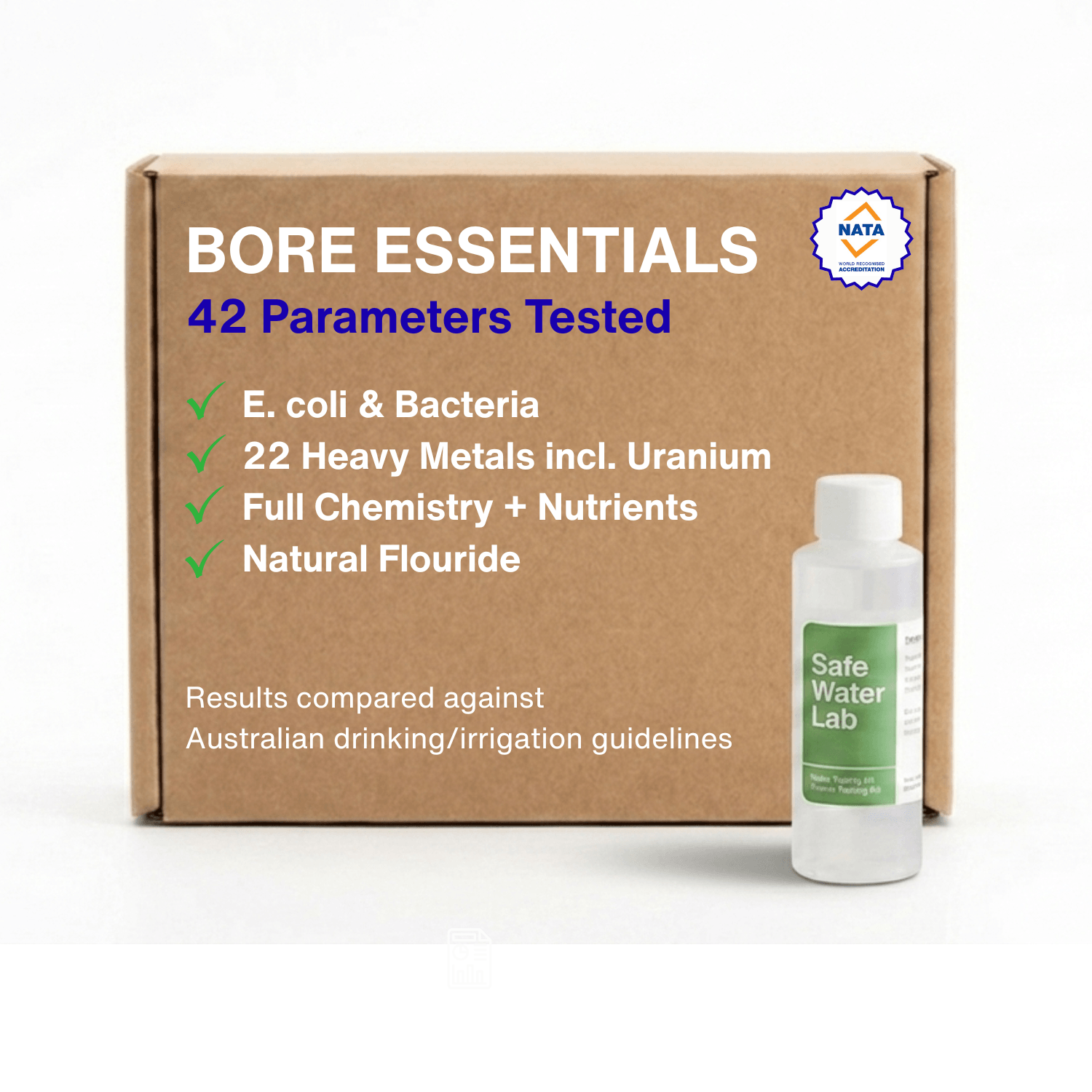
For most homeowners wanting to confirm their bore supply is safe to drink, Bore Essentials covers the core risks — microbiology, a full metals panel including arsenic, uranium and iron, fluoride, complete water chemistry, and nutrients. If your property is near a defence base, airport, fire training facility, or industrial site, Bore Advanced adds 30 PFAS compounds at trace detection level. If you are on rural or agricultural land and want a comprehensive contamination screen including pesticides, herbicides, and industrial solvents, Bore Complete covers everything.
-
The primary risk categories for bore water are: microbiology (E. coli from leaking septic systems, surface water infiltration, or a compromised bore casing), geological metals (arsenic, manganese, and uranium naturally elevated in many Australian aquifers), nutrients (nitrate from agricultural fertilisers and septic systems — elevated levels are particularly dangerous for infants), and water chemistry (pH, hardness, and mineral content that affects taste, appliances, and corrosion). On rural properties near cropping or grazing land, agricultural chemicals including pesticides and herbicides are also relevant. Near defence bases, airports, or industrial sites, PFAS is a serious concern.
-
Uranium occurs naturally in Australian groundwater — particularly in granite and sedimentary geology across NSW, SA, WA, and QLD. The ADWG guideline value for uranium is 0.017 mg/L, and concentrations in many aquifers naturally exceed this threshold with no visible sign in the water. Uranium has no taste, colour, or odour at concentrations of concern. It is included in every bore water kit because geological uranium is one of the most commonly exceeded ADWG parameters in Australian groundwater and one that most customers would not think to test for.
-
Yes. The most serious contaminants in bore water — arsenic, uranium, E. coli, nitrate, PFAS, and agricultural chemicals — are colourless, odourless, and tasteless at concentrations that can still affect health. Visible warning signs like iron staining, turbidity, or a sulphur smell are useful indicators of specific issues, but their absence does not confirm the water is within ADWG guidelines. Appearance and taste are not reliable indicators of chemical or microbiological safety.